13 Dining Room Decor Ideas to Create a Stylish and Inviting Space
Figuring out how to decorate a dining room starts with balancing daily function and personal aesthetics. The right dining room decor ideas provide a mix of furniture, lighting, color, texture, and practical layout solutions tailored to your lifestyle. A successful dining space balances function, comfort, scale, lighting, storage, traffic flow, and visual warmth.
Whether you lean toward a contemporary look, a moody modern atmosphere, or a relaxed coastal retreat, the goal is to design an area that serves your needs. Rather than adhering to a single rigid theme, building a room around high-quality materials and thoughtful spacing ensures it remains useful and relevant for years.
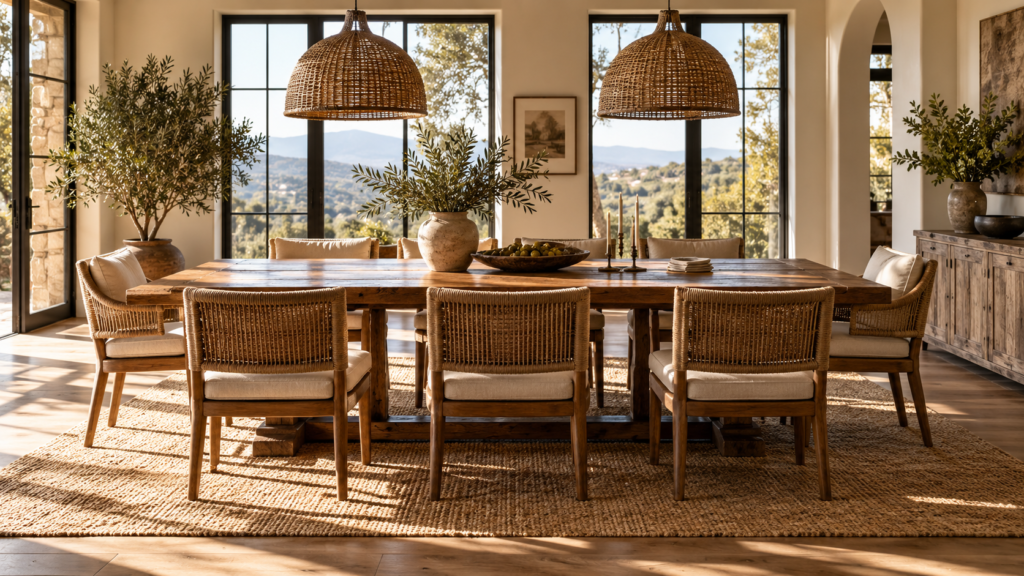
Planning Your Dining Room Design Ideas
Before choosing a visual direction, focus on functional planning. Successful dining room design ideas begin with evaluating the room dimensions, table size, chair clearance, and necessary walkways. Consider how natural light moves through the room, the placement of windows, and your need for artificial lighting during evening meals.
Storage needs and the frequency of room usage should also dictate your furniture selections. Once you establish the structural framework—ensuring there is enough space to walk behind pulled-out chairs and store serving ware—you can confidently apply your preferred visual style, whether that means minimalist silhouettes or traditional layered textiles.
13 Unique Dining Room Decorating Ideas
1. Modern Organic: Sleek Lines Meet Natural Textures
The modern organic approach blends clean architecture with tactile materials. Start with a light oak dining table featuring a streamlined silhouette. Pair it with woven or cane seating to introduce texture without adding visual weight. Keep the color palette focused on soft neutrals with occasional matte black accents to ground the design.

Overhead, use a sculptural paper, ceramic, or fabric pendant light to soften the sharp architectural lines. The key to this look is restraint; simple table decor allows the materials to stand out.
2. Compact Layouts: The Small Space Solution
A round pedestal table can be a smart choice for tighter dining spaces because the lack of sharp corners eases traffic flow and creates a lighter visual footprint. When exploring dining room decorating ideas for small spaces, consider armless chairs or built-in bench seating to maximize the available floor plan.
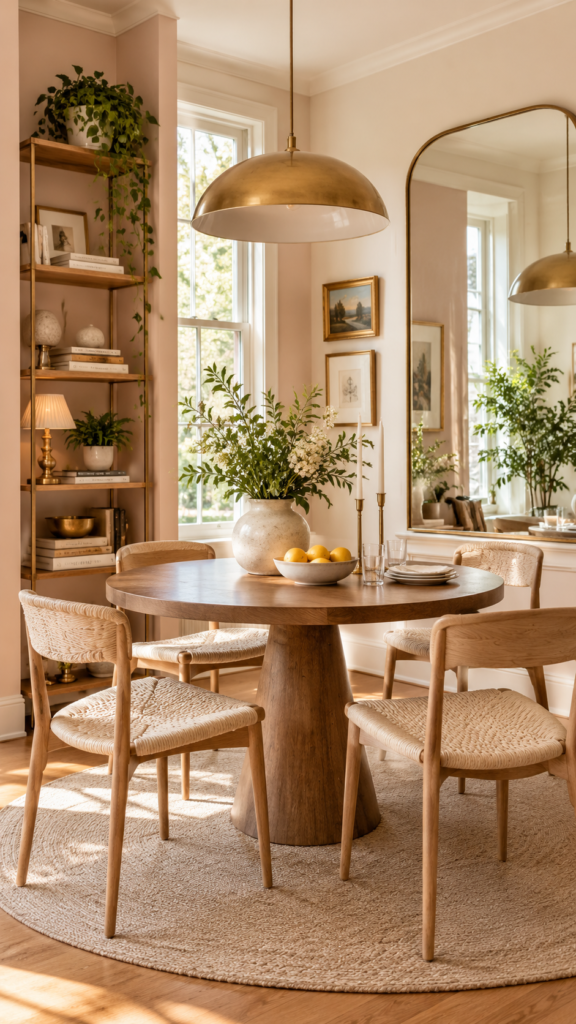
Take advantage of vertical space by utilizing wall-mounted storage or narrow shelving units. Hanging a large mirror on an adjacent wall helps bounce light around the room, which is a practical way to expand small dining room ideas visually.
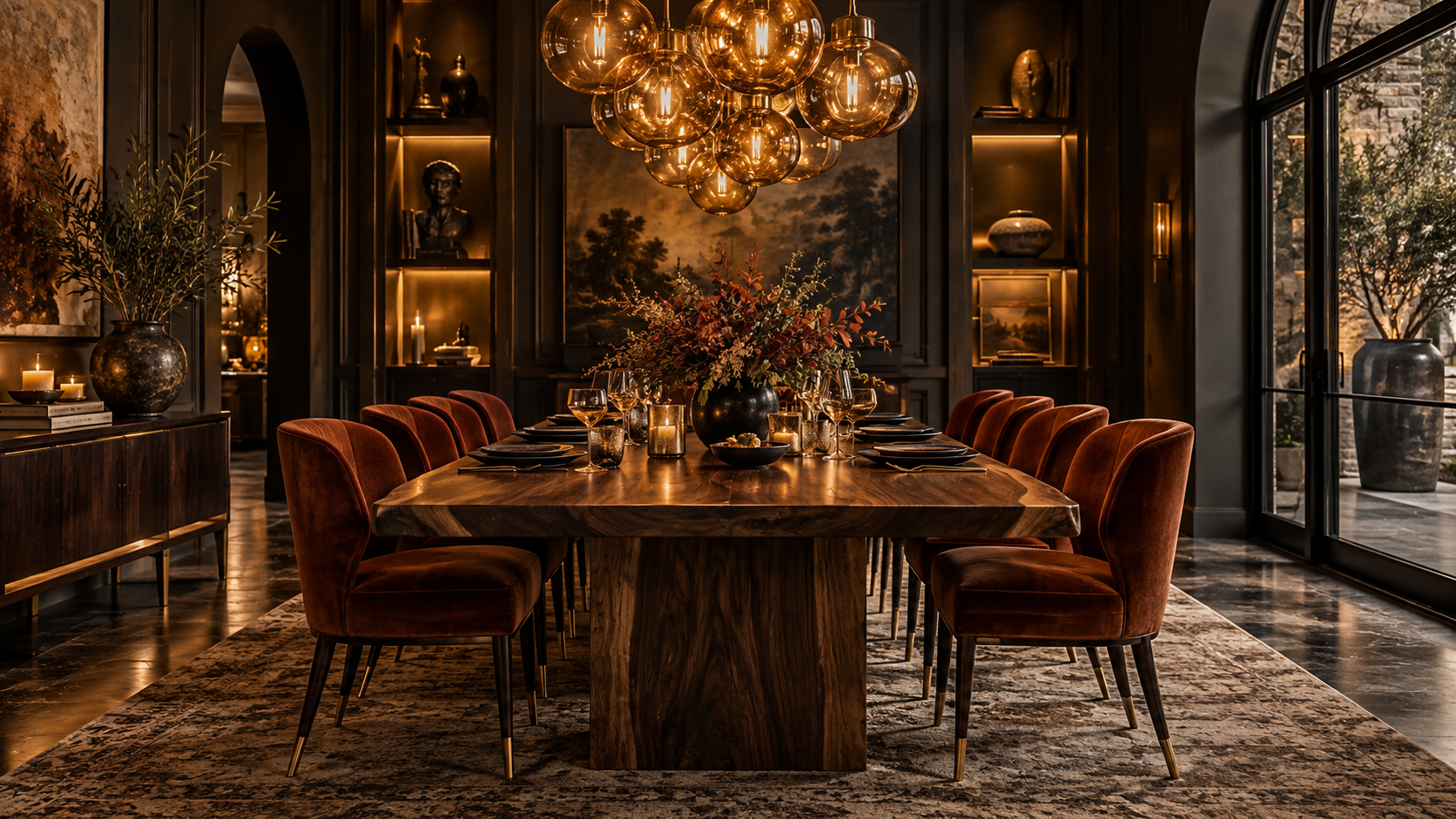
3. Earthy Elegance: Rich Tones and Classic Metals
Elegant dining room decor relies on material contrast and proportion rather than excessive ornamentation. Paint the walls in a rich, enveloping shade like terracotta or deep rust, and anchor the space with a dark wood table. Surround it with upholstered chairs covered in velvet or heavy linen for added comfort.
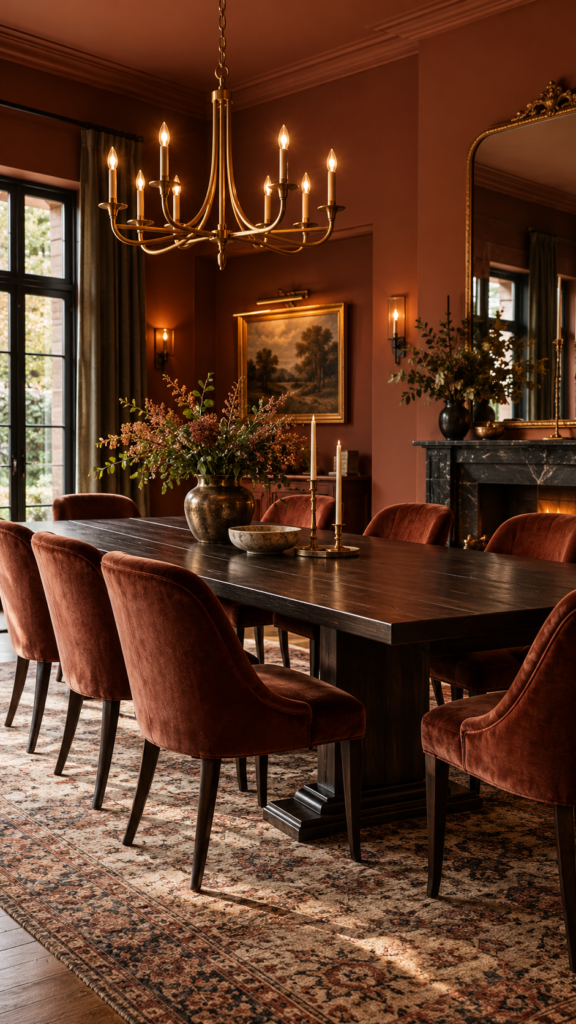
Incorporate brass or antique gold finishes through layered lighting, mirror frames, and cabinet hardware. Restrained table decor keeps the focus on the sophisticated interplay of dark wood and metallic shine.
4. The Maximalist: Layered Patterns and Colors
A maximalist room showcases layered collections, but it still requires hierarchy and careful editing. Create an expansive gallery wall featuring mixed art styles and dining room wall decor. The frames do not need to match exactly, but repeating a few finishes, colors, or materials helps the gallery feel intentional rather than chaotic.

Layering rugs and using eclectic seating works best when linked by a consistent color palette. Thoughtful repetition of colors and finishes can make a bold room feel more polished and considered.
5. Coastal: Breezy Whites and Natural Light
Coastal design thrives on relaxed simplicity without relying on literal nautical clichés. Emphasize natural light by framing windows with sheer curtains. Use a whitewashed wood table paired with seating made of woven materials, rattan, or slipcovered linen.
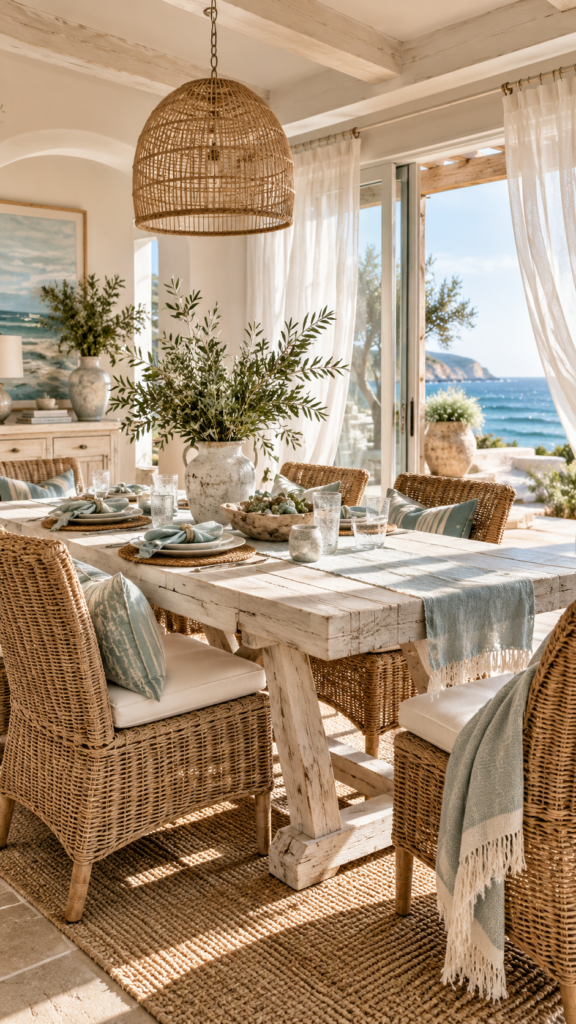
Keep the color palette muted with soft blue-green accents, sandy beige, and crisp white. The resulting atmosphere should feel airy, comfortable, and unfussy.
6. Vintage Eclectic: Thrifting and Mismatched Furniture
Sourcing thrifted furniture offers practical dining room makeover ideas while adding distinct character. The challenge of vintage eclectic design is making mismatched chairs feel cohesive. Unify varied seating by painting them a shared color, matching their seat cushions, or maintaining similar wood undertones.
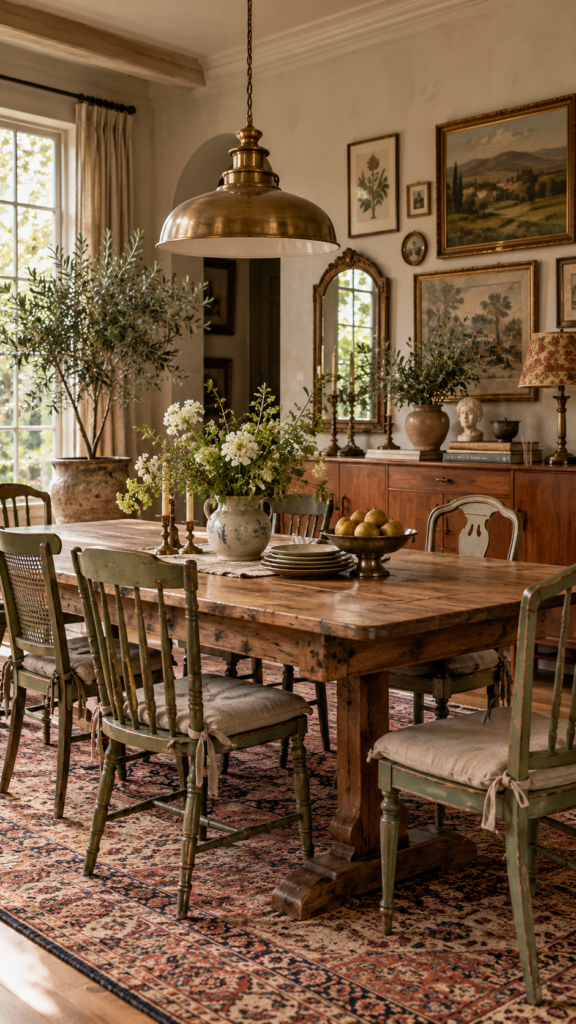
Pairing a varied chair collection with a very simple, solid dining table helps calm the visual noise and keeps the room balanced.
7. Industrial: Balancing Exposed Architecture
Industrial spaces often feature cold, hard surfaces like metal, exposed brick, and concrete. To make the room functional for dining, balance the architecture with softer materials. Incorporate wooden furniture, upholstered seating, and thick area rugs to absorb sound and provide physical comfort.

Use soft, layered lighting to reduce the harshness of the room’s structural elements. Heavy textiles and warm ambient light create a surprisingly inviting atmosphere within an industrial shell.
8. Mid-Century Modern: Retro Silhouettes
Mid-century style focuses on walnut finishes, tapered legs, and organic furniture shapes. When looking for modern dining room ideas, this era provides timeless silhouettes. Ground the room with a walnut table and integrate colors like burnt orange, mustard, olive, or muted teal through upholstery.
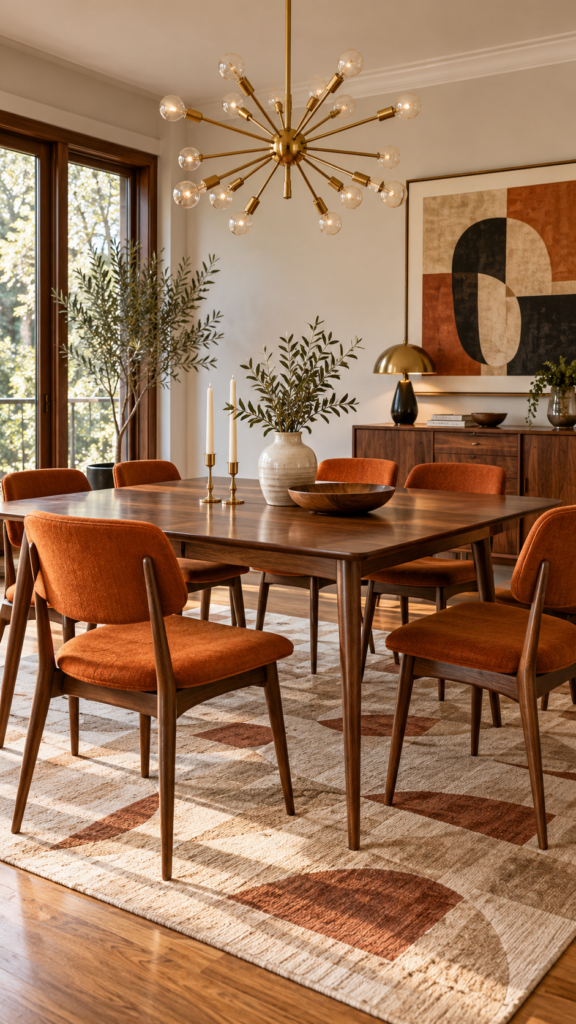
To prevent the styling from feeling dated or like a themed movie set, use only a few recognizable retro references, balancing them with contemporary art and modern brass lighting fixtures.
9. Botanical: Nature-Inspired Dining
Incorporating plants into a dining space adds life and vibrant color, but it requires practical planning. Evaluate the available natural light, watering access, and humidity levels before selecting your greenery. Consider the plant size at maturity to ensure it will not overtake the walkways or block the windows.

Instead of tall floral arrangements, use a low planter or greenery arrangement suited to the available light. Complement the foliage with earthy materials like stoneware, linen napkins, and a live-edge wooden table.
10. Scandinavian: Light, Bright, and Minimal
Scandinavian design offers stylish dining room ideas for everyday living by prioritizing uncluttered surfaces and functionality. Focus on light woods like ash or birch set against white or soft neutral walls. Keep the wall decor minimal and the seating simple.

In this minimalist setting, visual interest and warmth come from the quality of the materials and textiles, such as a flat-weave wool rug or a textured throw, rather than numerous decorative objects.
11. Moody Modern: Dark Walls and Dramatic Lighting
Dark colors can create a more intimate, enveloping atmosphere that works exceptionally well for evening dining. Paint the walls in deep shades of charcoal, navy, or plum. Balance the dark backdrop with controlled contrast by introducing light textiles, amber glass lighting, and metallic accents.
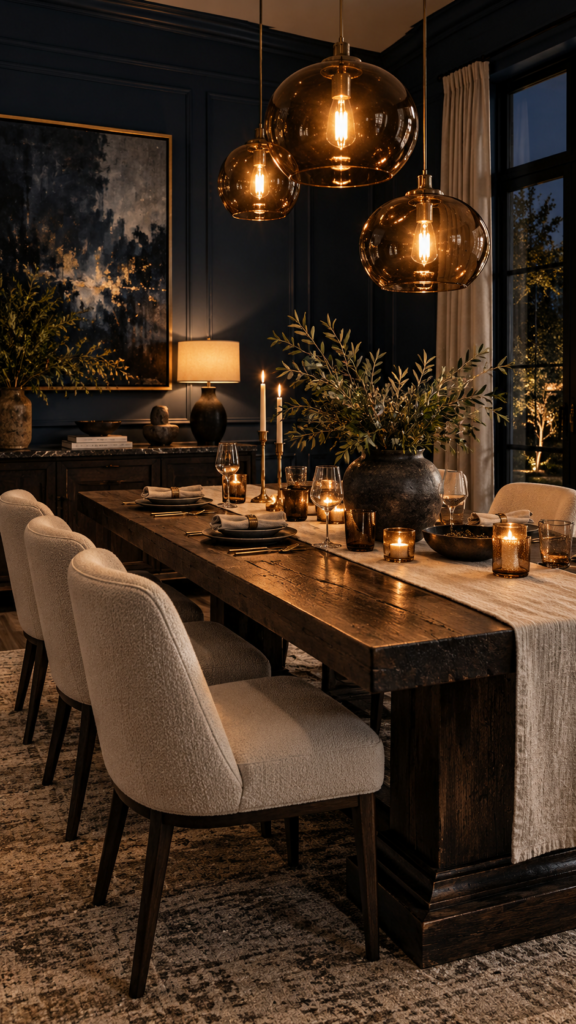
A heavy, dark wood table pairs effectively with the rich walls, while soft lighting ensures the room feels dramatic rather than gloomy.
12. Modern Farmhouse: Relaxed and Functional
A relaxed modern farmhouse aesthetic combines durability with comfortable, family-friendly materials. Choose a sturdy trestle table and install vertical shiplap or beadboard to protect the lower walls. Mixed seating works well here, combining wooden side chairs with slipcovered linen armchairs at the heads of the table.
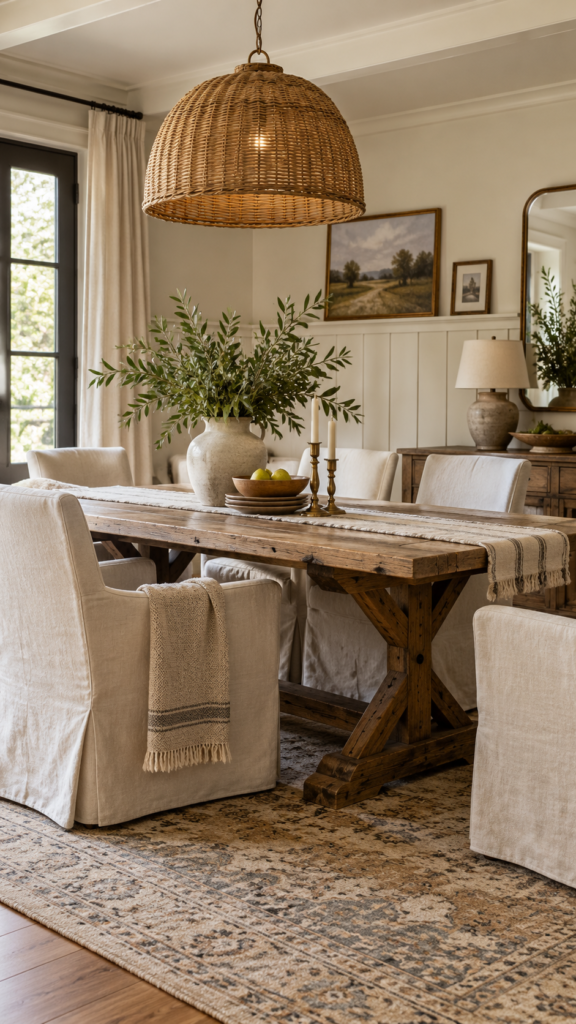
Soften the space with woven lighting fixtures and a vintage-wash, low-pile rug that can easily withstand high foot traffic.
13. Artistic and Sculptural: Emphasis on Form
Treat your dining room as an edited gallery space where the furniture serves as functional art. Focus on sculptural table bases—like fluted pillars or carved pedestals—and curved, organically shaped chairs. Add a piece of bold, asymmetrical wall art and utilize negative space so the room does not feel crowded.
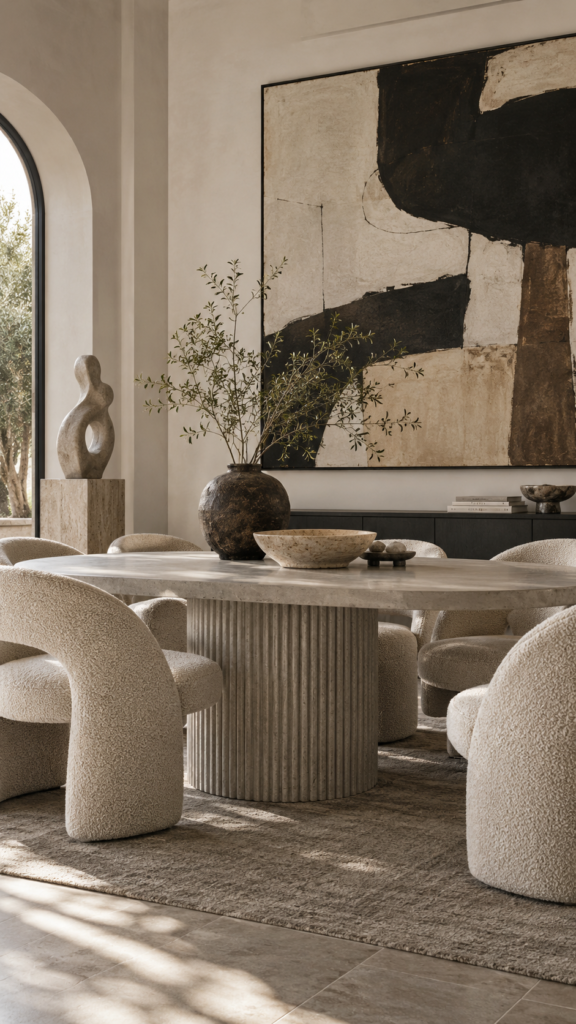
Because the furniture carries a strong visual weight, keep the rest of the room edited so the sculptural pieces remain the undisputed focal point.
How to Make a Dining Room Feel More Inviting
If you are looking for cozy dining room ideas, focus on elements that encourage guests to linger. Warm, layered lighting sets an immediate mood, while comfortable chairs with supportive backs ensure physical ease. Incorporating soft textiles like a rug underfoot or curtains framing the windows reduces echo and softens the room’s hard edges. Add character through thoughtfully placed art, living plants, and balanced table decor, ensuring there is still appropriate spacing for comfortable movement.
How to Choose the Right Dining Room Style
Selecting a design direction should begin with evaluating the existing architecture of your home and the furniture you already own. Consider the amount of natural light the room receives, the overall room size, and whether the space needs to function for formal dinners or casual family meals. You do not need to copy one style exactly. Mixing compatible influences while keeping a clear visual direction results in a space that aligns with your personal taste and required maintenance level.
Common Dining Room Decorating Mistakes
- Choosing a table that is too large for the room: Measure your room and ensure there is enough space for walkways.
- Using chairs that leave too little walking space: Keep adequate clearance between pulled-out chairs and walls.
- Choosing a rug that is too small: Ensure chair legs remain on the rug when pulled away from the table.
- Hanging the chandelier too high or too low: Relate the fixture’s height to the table surface, not just the ceiling.
- Using only one overhead light source: Add lamps or sconces to create layered, ambient lighting.
- Overdecorating the dining table: Keep centerpieces low and functional so they do not block conversation.
- Ignoring storage needs: Include a buffet or credenza if you need space for linens and serving ware.
- Using decor that is out of scale: Match the size of your art and mirrors to the proportion of the walls.
- Choosing uncomfortable chairs: Prioritize ergonomics and seat padding for rooms used frequently.
- Mixing too many unrelated styles: Find a common thread, like color or material, to link different design eras.
- Making the room look like a showroom: Inject personal touches, books, or art so the space feels lived-in.
Essential Guidelines for a Functional Space
Size Your Rug Correctly
A rug that extends roughly 24 to 36 inches beyond the table can be a useful starting point, depending on chair size and room proportions. This ensures that when guests pull their chairs out to sit down, the back legs remain comfortably on the rug rather than catching on the floor edge.
Allow for Comfortable Clearance
Around three feet of clearance is a useful target where space allows. The actual amount of clearance you need depends on chair depth, expected walkway use, room size, and the placement of nearby furniture like sideboards or cabinets.
Layer Your Lighting and Chandelier Placement
When reviewing dining room lighting ideas, aim to create layers rather than visual clutter. Combine ambient lighting from a central fixture with accent and task lighting from dimmers, wall sconces, buffet lamps, floor lamps, or candlelight. For the main chandelier, scale it to visually relate to the table. As a common starting point, the bottom of a dining light often hangs around 30 to 36 inches above the tabletop, though ceiling height and sightlines should influence the final placement.
Practical Dining Table Decor
Everyday dining room table decor should remain functional. Simple dining room centerpiece ideas—such as one low bowl, a ceramic vase, candlesticks, a small tray, or seasonal branches—complement the table without dominating it. Avoid tall centerpieces that block eye contact and hinder conversation across the table.
Budget-Friendly Dining Room Updates
You do not have to buy entirely new furniture to refresh the space. There are many practical dining room decor ideas on a budget. Consider affordable updates like applying a fresh coat of paint, finding secondhand chairs, or swapping out old lighting shades. You can also introduce vintage mirrors, crisp new table linens, framed art prints, and thrifted ceramics. Sometimes, simply rearranging existing furniture or decluttering surfaces makes the biggest impact.
Frequently Asked Questions
How do I make my dining room look more stylish?
Start by clearing clutter and defining a cohesive color palette. Introduce layered lighting, update your window treatments, and anchor the space with a correctly sized rug to give the room an intentional, finished appearance.
What should I put in the center of a dining table?
Opt for low-profile, functional decor that does not obstruct conversation. A decorative bowl, a low vase with fresh greenery, or a cluster of candlesticks on a small tray works beautifully.
How do I decorate a small dining room?
Use visually light furniture like a round pedestal table or armless chairs to improve traffic flow. Incorporate a large wall mirror to bounce light and maximize vertical space with wall-mounted shelving.
What size rug should go under a dining table?
Aim for a rug that extends 24 to 36 inches past the edges of the table. This allows dining chairs to stay level on the rug even when pulled out for seating.
How high should a dining room light hang above the table?
As a general guideline, the bottom of the fixture should hang 30 to 36 inches above the tabletop. Adjust this measurement slightly based on the height of your ceilings and the size of the fixture.
How can I make my dining room look expensive on a budget?
Focus on decluttering, applying a fresh coat of rich paint, and installing dimmer switches for ambient lighting. Upgrading cabinet hardware and adding long, textured curtains are cost-effective ways to add immediate sophistication.
Should dining room chairs match the table?
They do not have to match exactly. Mixing chair styles or materials with the dining table often creates a more curated, dynamic look compared to a standard matching set.
How do I make a dining room feel cozy without cluttering it?
Rely on textures rather than objects. Use upholstered chairs, a soft area rug, heavy linen curtains, and warm lighting to create a comfortable environment while keeping surfaces clear of excess decor.
Final Thoughts
Designing a beautiful space takes time, and successful decor relies heavily on balancing comfort, proportion, lighting, texture, function, and personal style. Rather than trying to buy everything at once, improve the room gradually by adding thoughtful layers and practical elements as you find them. The best dining rooms feel considered, comfortable, and personal enough that people want to stay at the table a little longer.