How to Style a Coffee Table Like an Interior Designer
The coffee table often sits at the center of the living room, making it a natural focal point ، the coffee table naturally acts as its focal point. Knowing how to style a coffee table effectively brings a sense of order and personality to the room, turning an everyday piece of furniture into a considered design feature. A successful arrangement requires a thoughtful balance of beauty, function, scale, height, texture, color, and negative space.
In this guide, we will explore practical editorial methods for living room coffee table decor. You will learn how to arrange objects using different heights and materials, adapt your styling to the shape and material of your table, and avoid common decorating mistakes. Whether your interior leans toward organic modern, relaxed coastal, or curated maximalism, these principles will help you design a surface that feels collected and inviting.
A Simple Coffee Table Styling Formula
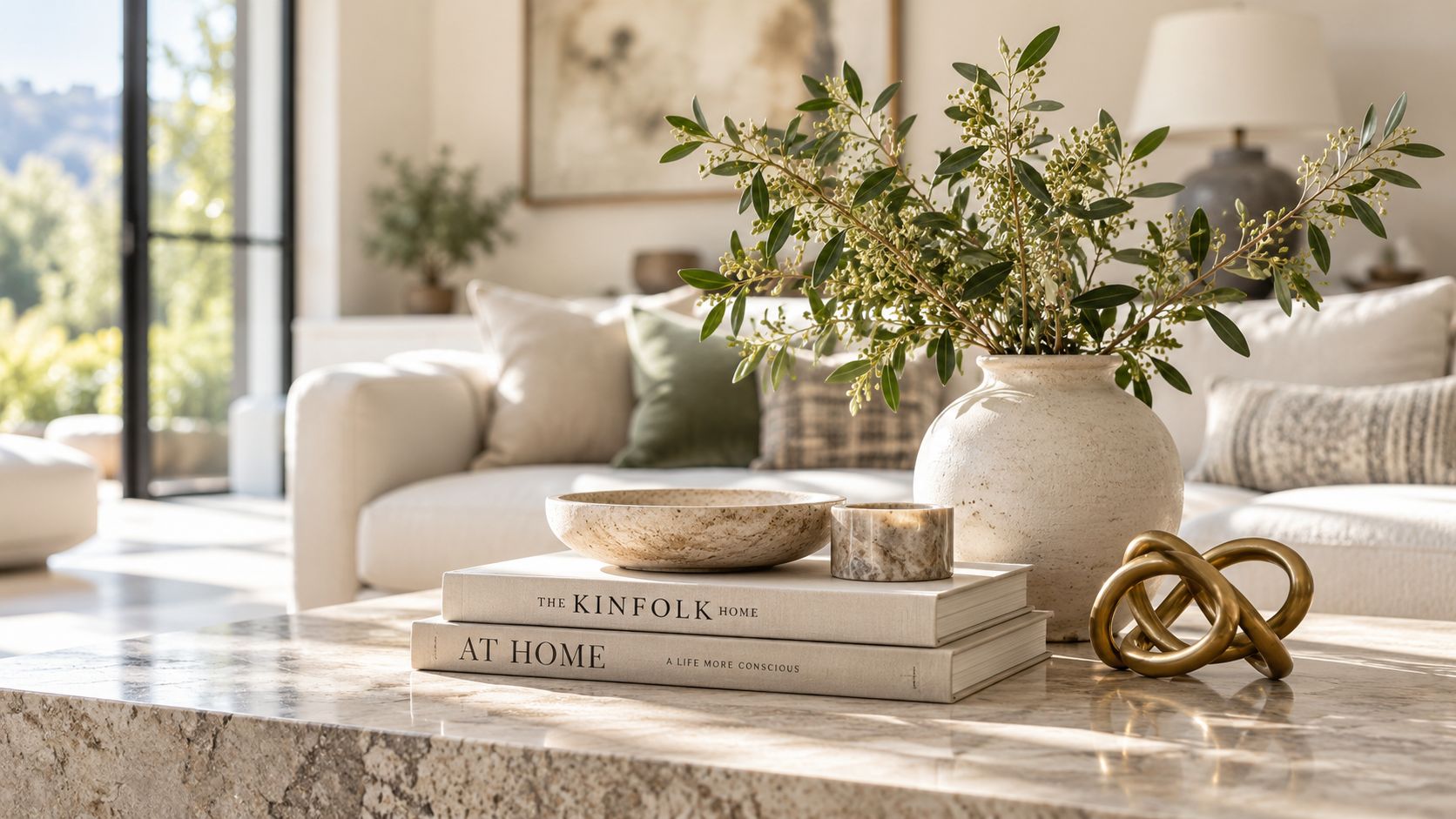
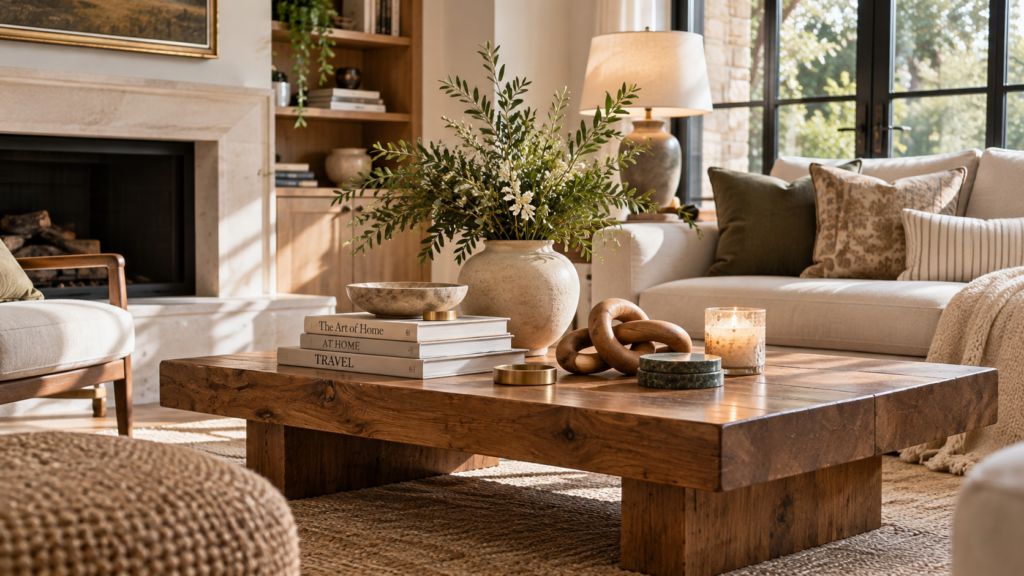
If you are looking for an immediate starting point, having a basic framework makes the styling process much easier. You can approach almost any table using this flexible formula: one anchor piece + one stack of books + one natural element + one sculptural accent + negative space.
You do not need every single category on every table, but this combination provides a reliable foundation. For example, your anchor piece might be a textured stone tray. Inside the tray, you can place a stack of two architecture books, add a medium-height vase with fresh greenery, and place a small brass knot sculpture beside it. Leaving the rest of the table empty provides the essential negative space that makes the arrangement feel deliberate.
Foundational Guidelines for Coffee Table Styling
To master interior designer coffee table styling, it helps to understand a few guiding principles regarding grouping, height, and scale. These are not rigid laws, but rather structural concepts that make an arrangement feel visually balanced.
The rule of three is a useful starting point, not a requirement. Designers often use odd-numbered groupings because they can create a relaxed, dynamic flow that encourages the eye to move around the display. However, groupings of two, four, or even one strong, substantial object can work equally well depending on the size of your table and the surrounding room.
Varying the heights of your objects is also crucial for preventing a flat, one-dimensional look. Think in three levels. Low elements, such as books and trays, ground the arrangement. Medium-height items, like chunky candles and decorative bowls, bridge the gap. Finally, taller elements, such as vases and architectural branches, draw the eye upward. When incorporating tall items, make sure they are airy or placed off-center so they do not block sightlines between people seated around the table.

Essential Elements for Coffee Table Decor Ideas
Building a collected display requires a mix of functional and decorative items. Having a versatile selection of these elements on hand will give you endless coffee table styling ideas.
Coffee Table Books Decor: Books are foundational. They add low-level height, introduce color, reveal your personal interests, and create a solid platform for elevating smaller objects. Choose books you actually enjoy reading rather than buying them solely for aesthetics. Usually, a stack of two or three books is plenty, depending on their thickness.
Natural Elements: Bring organic shapes into the room with greenery, flowers, or branches. A simple pothos plant, a vase of eucalyptus, or dried stems can soften the hard, geometric edges of your furniture.
Everyday Functionality: Real homes require practical items like coasters, remote controls, matches for candles, and reading material. Incorporate these seamlessly by using decorative lidded boxes, catchalls, or small woven baskets to keep the surface organized without looking cluttered.

Concept 1: Modern Boho Coffee Table Decor Ideas
The modern boho approach blends clean, contemporary lines with warm, organic textures. Imagine a living room featuring a low-profile light oak table resting on a cream-colored Berber rug, paired with a crisp white linen sofa and geometric accent pillows.
For modern coffee table decor in this setting, rely on high contrast. Start with a matte black metal tray to ground the light wood of the table. Inside the tray, stack two monochromatic design books. Place a smooth, spherical white ceramic vase on top, holding a single, structured monstera leaf. Finish the look with a natural wood chain link sculpture. This arrangement relies heavily on clean space, allowing the curated items to breathe.

Concept 2: Earthy Organic Modern Textures
If you prefer a warmer aesthetic, the earthy organic modern style offers rich inspiration. Picture a chunky, reclaimed wood coffee table with visible grain, placed near a cognac leather sofa and a vintage rug in faded rust tones.
Your coffee table centerpiece ideas should reflect tactile, earthy materials. Place a hammered brass or dark bronze bowl off-center, filling it with a few large pinecones or dried moss. Beside it, stack vintage books with muted ochre and sage green covers. Add a terracotta vase holding dried pampas grass or preserved branches. The mix of rough wood, smooth brass, and baked clay creates a sensory-rich experience.

Concept 3: Relaxed Coastal Living Room Decor
The relaxed coastal style takes an airy, bright approach to home decor. Visualize a round, whitewashed wood table in a sunlit room featuring slipcovered linen seating and soft seafoam accents.
Avoid literal ocean motifs like anchor prints. Instead, evoke the coast through texture and light. Use a round woven rattan tray as a base. Inside, stack photography books featuring coastal landscapes. Place a recycled pale blue glass vase on the books, filled with wispy dune grasses. Add a smooth piece of genuine driftwood nearby. The combination of bleached wood, woven rattan, and watery glass creates a calm, breezy atmosphere.

Concept 4: Eclectic Maximalist Centerpiece Ideas
For those who love rich color and history, eclectic maximalism is a highly expressive approach. Maximalism still requires careful editing and visual hierarchy; otherwise, the table simply looks cluttered. Imagine a vintage brass-framed glass table reflecting an emerald green velvet sofa and an overdyed magenta rug.
Start with multiple stacks of colorful art and fashion books to create pedestals. On one stack, place a cluster of vintage brass figurines. On another, position a heavy vintage crystal catchall or decorative bowl to hold matchbooks or small curiosities. For height, incorporate mismatched brass candlesticks with vibrant taper candles. Because the items are connected through their rich colors and metallic finishes, the display feels deliberate and curated.

Concept 5: Minimalist and Wabi-Sabi Styling
In contrast to maximalism, the minimalist and wabi-sabi aesthetics focus on simplicity, raw materials, and finding beauty in imperfection. Picture a low-profile, asymmetrical stone or plaster table surrounded by firm floor cushions and low-slung wooden chairs.
When decorating in this style, leave generous negative space so the material and form of the table remain visible. Place a single, oversized design book on one end. On the other, feature a hand-pinched wabi-sabi ceramic bowl, left empty or holding a single piece of lava rock. Add a tall, textured stone vase holding one arching dry branch. This sparse arrangement brings a sense of grounded calm to the room.

Concept 6: Vintage Botanical Inspired Styling
This theme blends nostalgic elements with a lush, greenhouse feel. Imagine a mid-century modern walnut table with tapered legs, set against a tufted mustard sofa and forest green velvet curtains.
Lean into deep greens and antique finishes. Start with an antique mirrored tray featuring a tarnished brass rim, which will reflect the room’s light. Inside the tray, stack vintage botanical illustration books. Place a small maidenhair fern in a weathered terracotta pot directly onto the table surface. Rest an antique brass magnifying glass gracefully on the book stack, and finish with a dark amber glass candle for a cozy, library-like atmosphere.

How to Decorate a Coffee Table Based on Its Shape
The shape of your furniture dictates how you should organize your decor. Interior design strategies adapt to the geometry of the table to ensure the arrangement feels balanced.
Styling Round Coffee Tables
Round tables lack straight edges, making them slightly tricky to style. The most effective approach is a flexible triangle layout. Place a focal point (like a vase) at one point, a stack of books at the second, and a sculptural object at the third. This keeps the circular surface visually anchored.
Styling Rectangular Coffee Tables
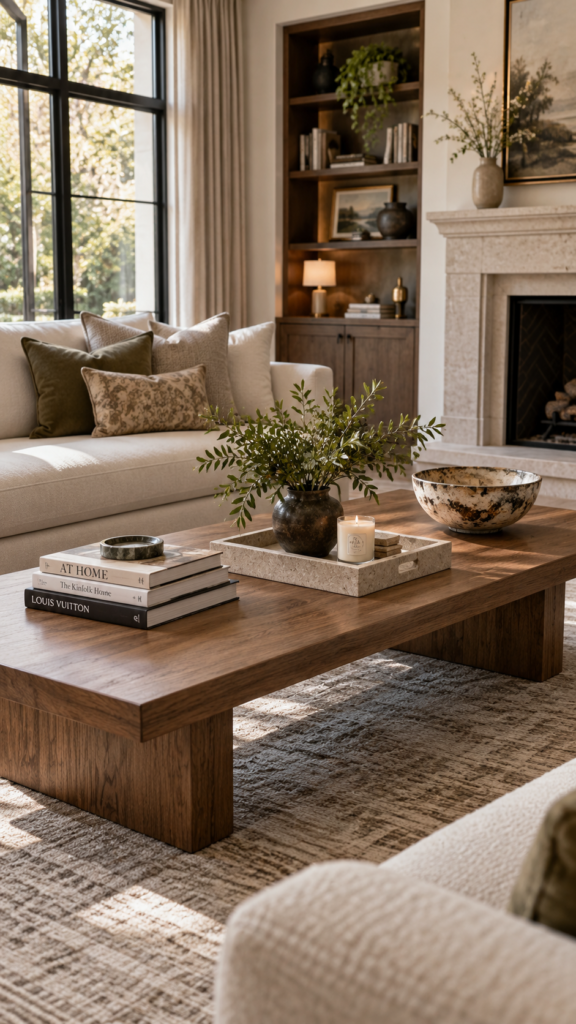
Rectangular tables provide plenty of surface area. A visual grid system works best here. Mentally divide the table into two or three zones. You might place a large tray in the center, a stack of books on the left, and a decorative bowl on the right. Keeping items in defined zones prevents the long surface from feeling scattered.
Styling Square Coffee Tables
Square tables hold significant visual weight. To style them, divide the square into four smaller quadrants. Fill three quadrants with contrasting shapes—a round tray, rectangular books, and an organic plant—and leave the fourth quadrant completely empty for breathing room.
Styling Oval Coffee Tables
Oval tables offer the length of a rectangle with the soft edges of a round table. Follow the elongated shape by creating an asymmetrical arrangement. Place a dominant grouping on one side, such as books and a tall vase, and balance it with a single low item, like a textured bowl, on the opposite end.
Styling Nested Coffee Tables
Nested tables consist of two or more overlapping tables. Because the furniture itself is visually complex, keep the decor minimal. Style the taller table with a prominent item, like a vase of fresh flowers, and leave the lower table bare or style it with a single book.
How to Style a Small Coffee Table
If you are working with a compact surface, prioritize simplicity to preserve usable space. A small table usually only needs one neat stack of books, a single sculptural object or candle placed on top, and perhaps one compact vase. Avoid large trays or spreading multiple small items across the surface.
Pairing Decor with Coffee Table Materials
The material of your table should influence the objects you place on top of it. Creating contrast between materials is a subtle way to make the styling feel sophisticated.
- Wood Coffee Tables: Contrast the heavy, warm grain with glass, smooth ceramic, polished stone, or brass accents.
- Glass Coffee Tables: Glass can feel cold, so bring in warmth with stacked books, wooden objects, woven trays, or soft textiles.
- Stone or Marble Coffee Tables: Balance the hard, cool surface of stone with natural wood elements, organic ceramics, and fresh greenery.
- Metal Coffee Tables: Prevent industrial metals from feeling too stark by incorporating natural materials, terracotta, and soft botanical elements.
The Practicality of Coffee Table Tray Decor
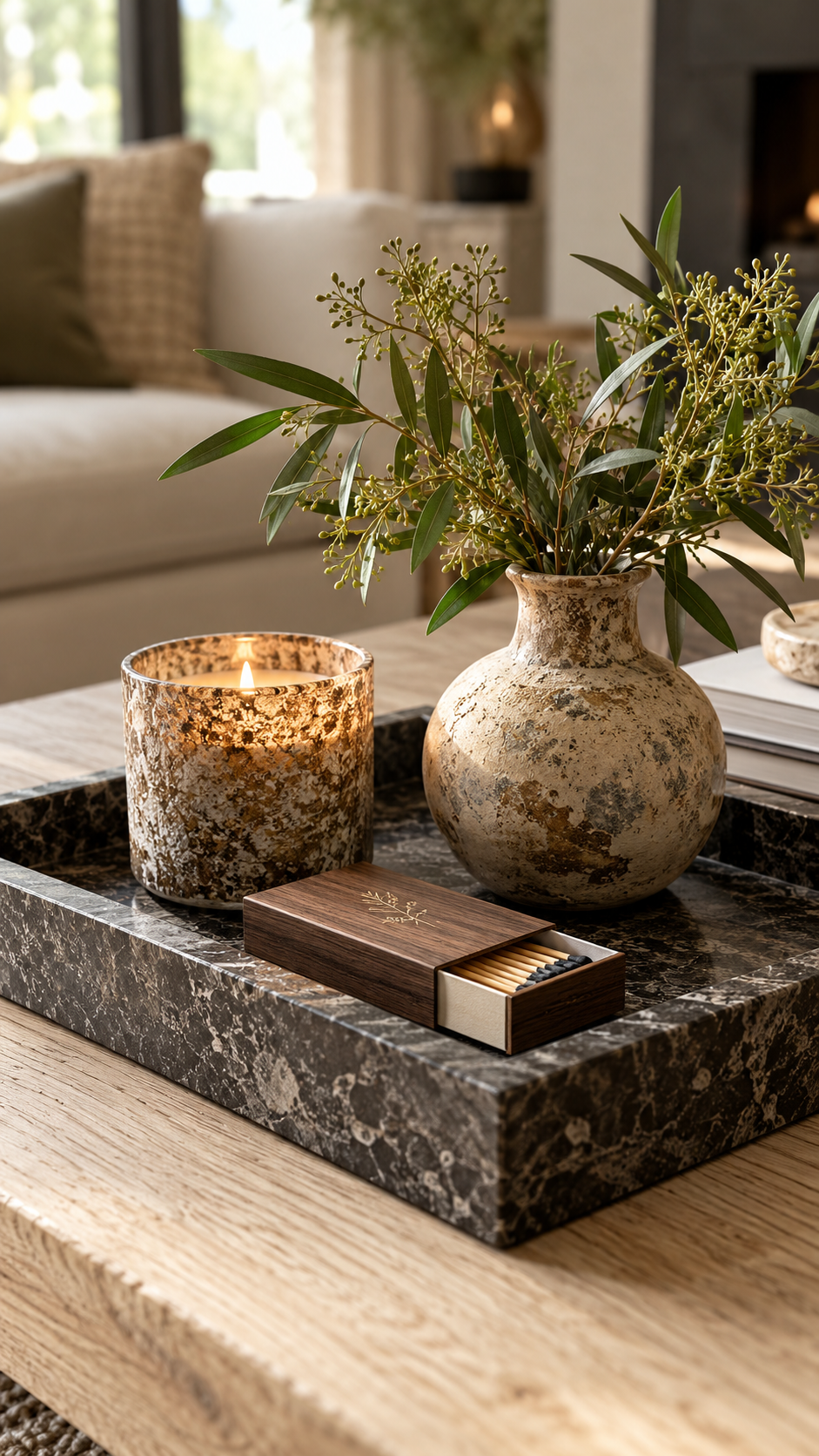
Coffee table tray decor is a popular styling tool because it visually groups small, disparate items into one organized unit. If you place a candle, coasters, and matches loosely on a table, they can look like clutter. A tray acts as a frame, giving those items purpose and boundaries.
Trays also provide an excellent opportunity to introduce contrasting materials. Try pairing a wooden table with a stone or metal tray, a glass table with a warm wood or woven rattan tray, or a marble table with a leather tray. Additionally, a tray makes everyday life easier; if you need to clear the table for a board game or drinks, you can lift the entire arrangement away at once. Keep in mind that while trays are highly useful, they are optional and not required on every table.
Common Coffee Table Styling Mistakes to Avoid
Even with great taste, certain missteps can disrupt the flow of your living room. Keep these common mistakes in mind so you can avoid them.
- Overcrowding the Surface: A table completely covered in decor has no room for practicality. Keep enough of the surface clear for everyday use, like setting down a drink or resting a book.
- Using Decor of the Same Height: If everything on the table is flat, the display looks uninspired. Introduce vertical interest with a vase or candlestick.
- Blocking Sightlines: Placing towering floral arrangements in the center of the table disrupts conversation. Move tall items to the edges or choose airy, see-through branches.
- Ignoring Scale: A tiny succulent looks lost on a massive rectangular table, while a giant art book overwhelms a compact round table. Match the size of your decor to the size of the furniture.
- Using Too Many Tiny Objects: A collection of small trinkets often reads as clutter. Group them in a decorative box, or swap them for fewer, more substantial pieces.
- Forgetting Everyday Functionality: Design should not make life harder. Ensure there is a designated, attractive spot for remote controls and coasters.
- Making Everything Perfectly Symmetrical: Rigid symmetry can feel sterile. Embrace slight asymmetry for a more relaxed, lived-in look.
- Ignoring the Rest of the Room: Your table styling should relate to the surrounding space. Pull colors or materials from your pillows, rugs, or art to create a unified design.

Subtle Seasonal Coffee Table Styling Ideas
Because the coffee table sits centrally in your home, it is the perfect spot for subtle seasonal updates. Avoid overly literal, themed decorations and focus instead on shifting colors and natural materials to keep the surface functional.
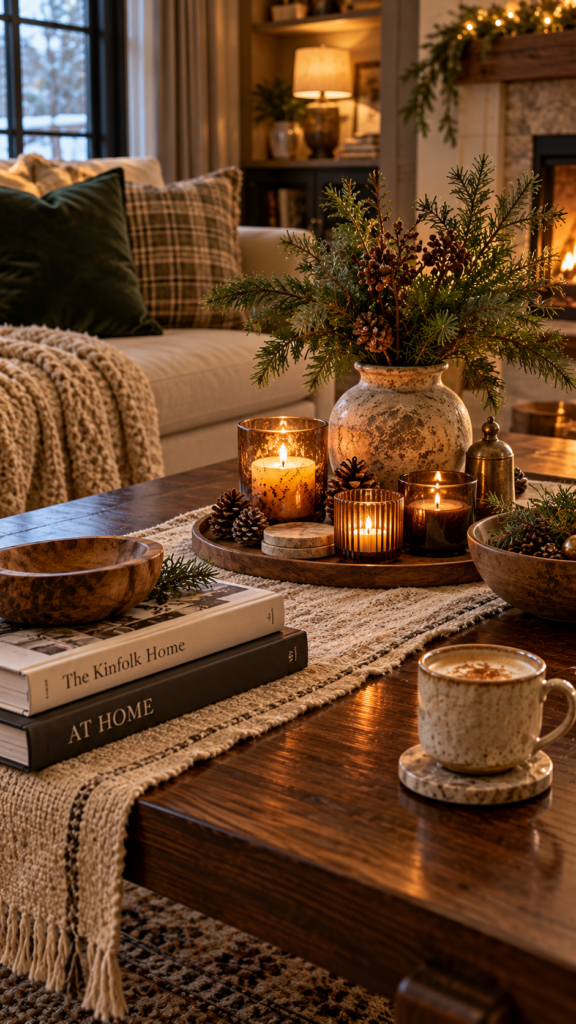
In the spring and summer, lighten the visual weight of the table. Swap out heavy wooden bowls for glass or pale ceramics. Incorporate fresh, bright blooms, lighter-colored book covers, and citrus-scented candles. As the weather cools in fall and winter, shift toward richer textures. Introduce branches with autumn leaves, amber glass candles with woody scents, and metallic accents like brass or silver to reflect warm indoor lighting.
Frequently Asked Questions
How many items should you put on a coffee table?
There is no strict rule, but groupings of three to five items often look best on a standard-sized table. Focus on balancing different shapes and heights rather than counting objects, and always leave ample empty space for practicality.
What should go in the center of a coffee table?
You do not necessarily need to place anything in the exact center, especially on long tables. If you prefer a centered look, a low decorative bowl, a broad tray, or a short vase of flowers works well without blocking conversation.
How tall should coffee table decor be?
Decor should be tall enough to add vertical interest but short enough that it does not block the line of sight between people sitting across from each other. If you use tall branches, ensure they are airy and sparse.
How do you style a small coffee table?
Keep it simple. Stick to one stack of books and a single small decorative object or plant on top. Avoid large trays and multiple clusters to preserve whatever usable surface space you have.
Should coffee table decor match the living room?
It does not need to match exactly, but it should coordinate with the room’s overarching style. Pulling an accent color from a rug or mimicking the metal finish of your lighting helps tie the room together.
Do you need a tray on a coffee table?
No, a tray is entirely optional. Trays are highly useful for organizing small items like remotes and coasters, but if your decor consists mainly of large books and a vase, you can style the table beautifully without one.
Final Thoughts on Living Room Coffee Table Decor
Learning how to style a coffee table takes a bit of experimentation. By playing with scale, introducing varied textures, and combining personal interests with natural elements, you can elevate the center of your living room.
Before purchasing new decor, look around your home and experiment with books, bowls, and objects you already own. The best coffee table arrangements look considered without feeling overly arranged—and still leave room for everyday life.