How to Mix Modern and Vintage Furniture Successfully
Creating a home that feels collected and intentional often means stepping away from matching sets. If you want a space with character, learning how to mix modern and vintage furniture is a great place to start. Blending different eras adds depth and history, moving your home away from a generic showroom aesthetic. Whether your preferred style is Contemporary, Transitional, Eclectic, Mid-Century Modern, Traditional, Organic Modern, or Bohemian, combining old and new pieces helps anchor the overall design.
The secret to mixing furniture from different eras lies in finding common ground. Without the right balance of scale, color, and texture, a room can easily look cluttered. By establishing thoughtful connections between contemporary lines and historical craftsmanship, you can transform your space into a carefully curated haven that feels completely your own.
A Useful Starting Point: The 80/20 Approach
When exploring how to mix furniture styles, a useful starting point is the 80/20 approach. Rather than splitting your furniture evenly between old and new—which can leave a room lacking clear direction—let one style lead. Make the room 80% modern with clean-lined foundational pieces, then incorporate 20% vintage accents.
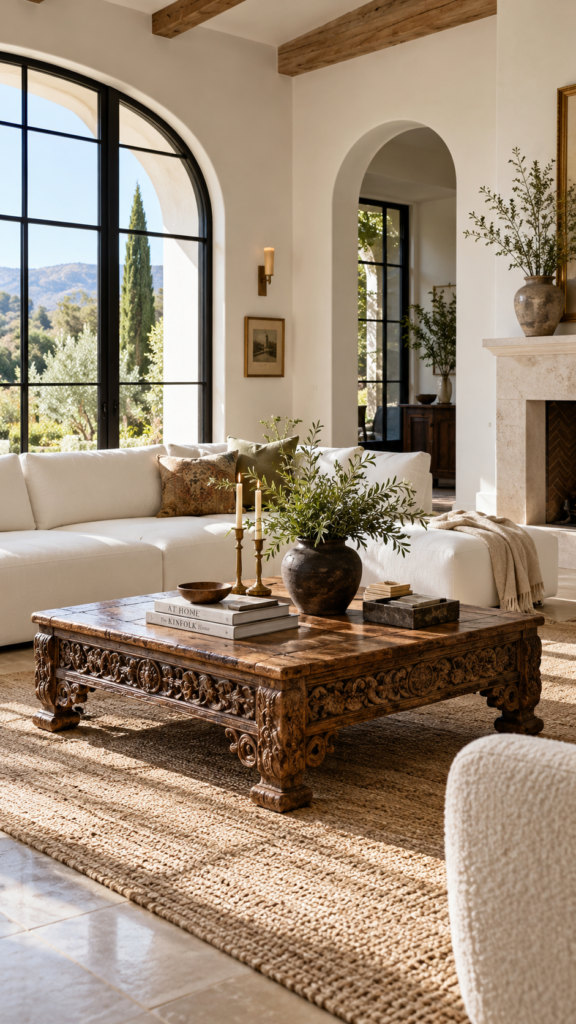
This ratio is flexible; the real goal is to establish one clear visual direction. Letting modern furniture serve as the backdrop allows older items, like a weathered antique rug or a carved wood side table, to stand out as focal points. The contemporary foundation keeps the room feeling organized, while the older items provide soul and history.
Unite Eras with a Cohesive Color Palette
Color is one of the strongest tools you have when mixing old and new furniture. Even if two items originate from different centuries, they relate to one another when they share a color family. A strict color palette acts as a visual bridge.
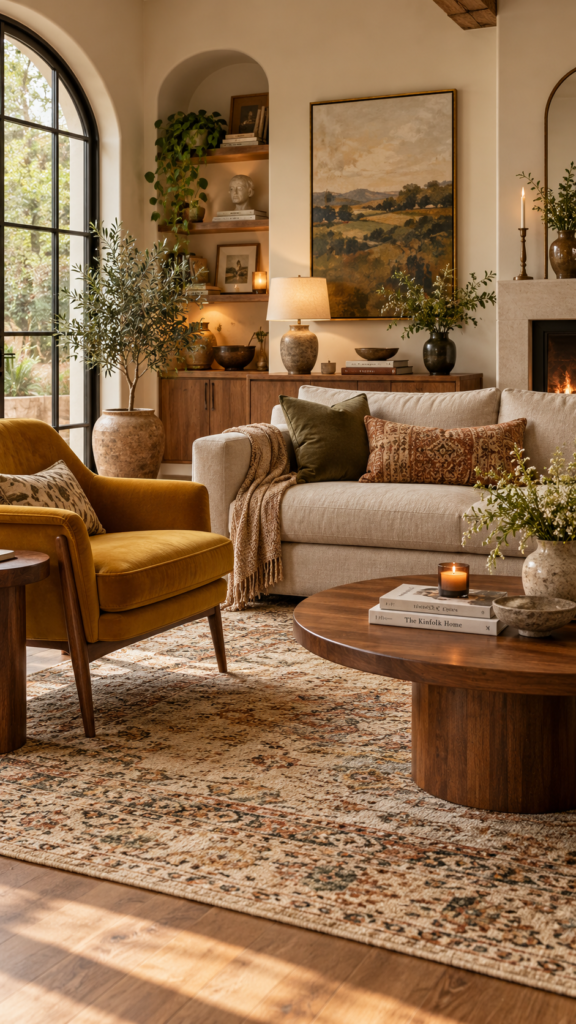
For example, a mid-century modern mustard yellow chair sits naturally next to a contemporary beige linen sofa when tied together by warm, earthy tones. Because the colors complement each other, the difference in their design eras becomes an intentional feature rather than a flaw.
If you have a dark vintage mahogany dresser, try painting the wall behind it in a moody, modern tone like deep charcoal or forest green. The modern wall color helps update the traditional furniture, linking it naturally to the rest of your contemporary decor.
Play with Contrasting Shapes and Silhouettes
Eclectic Interior Design thrives on contrast. When combining furniture, pay attention to the shapes and silhouettes of each piece. Modern furniture often features straight lines, sharp angles, and low profiles, while vintage furniture frequently showcases carved details, curved legs, and ornate woodwork.
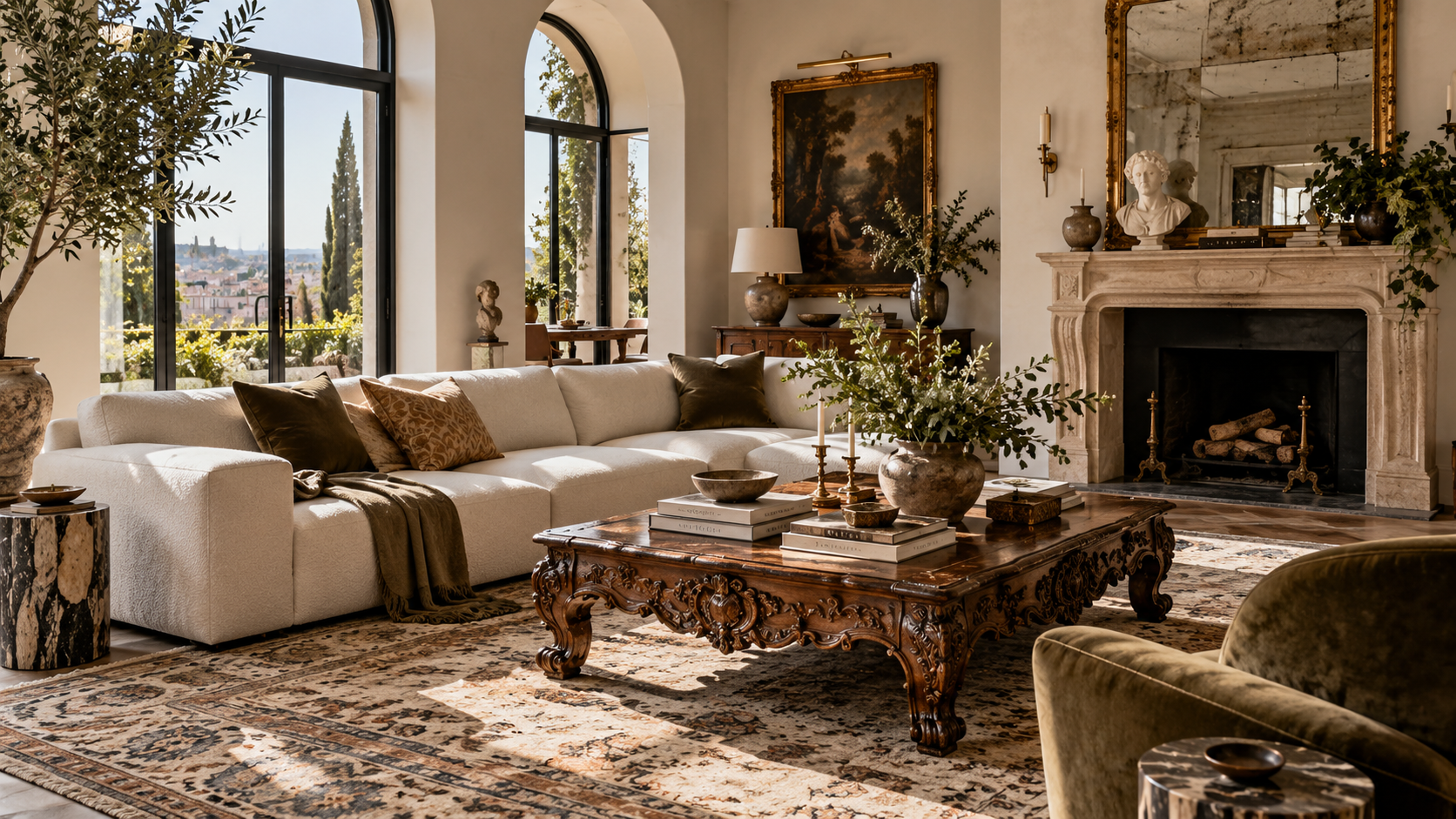
Pairing a boxy, modern sectional sofa with a round, Victorian-style wooden side table creates a satisfying visual friction. The curves of the vintage table soften the rigid lines of the sofa. Conversely, the simplicity of the modern seating prevents the ornate table from feeling too heavy or old-fashioned.
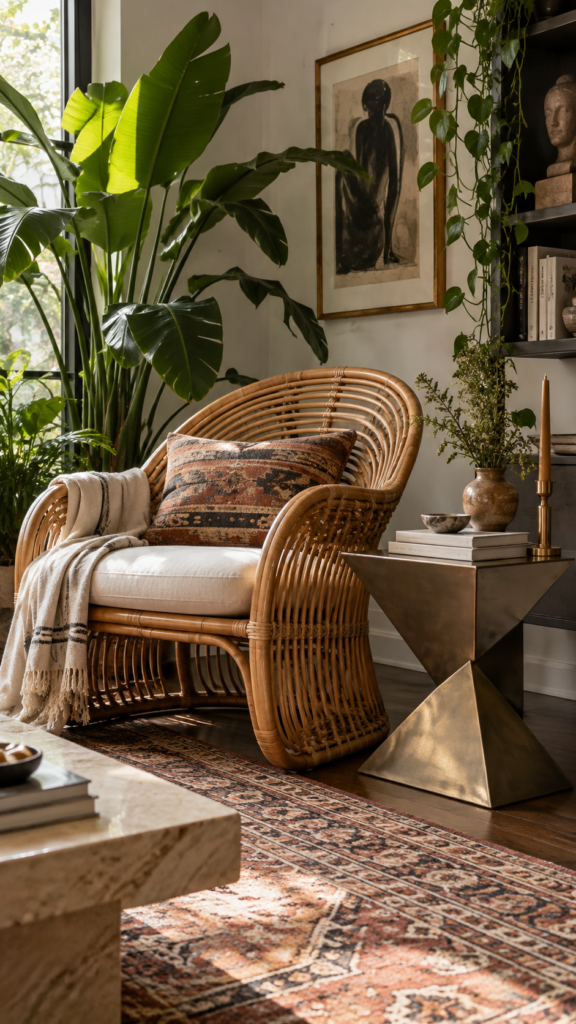
You can enhance this contrast by bringing in organic shapes. A curvy vintage rattan chair next to a minimalist, geometric metal side table highlights the best structural qualities of both pieces.
Vintage and Modern Living Room Ideas
The living room is often the central gathering space, making it an ideal place to experiment with a Vintage and Modern Living Room aesthetic. Prioritize a layout that is both visually engaging and comfortable for daily use.
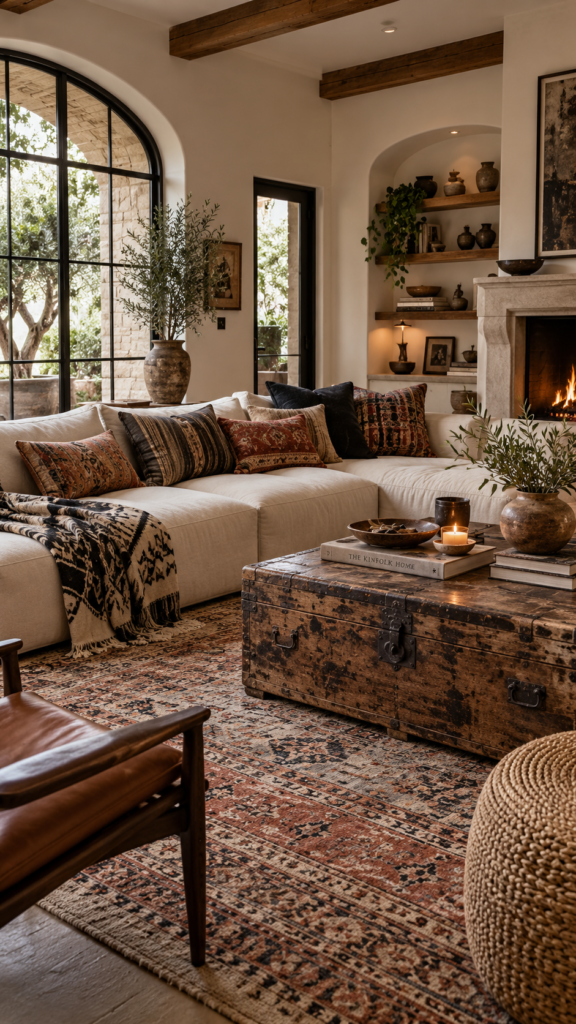
Start with a modern, oversized modular sofa. Modern seating can be an easy way to prioritize everyday comfort, while vintage pieces add character and history. For example, a modern sofa with a vintage coffee table—like an old, distressed wooden trunk—offers both practicality and a rich, rustic texture.
Layer the room with textiles to tie the look together. Drape a modern geometric throw blanket over the sofa, and place vintage kilim pillows on top. This subtle layering ensures the room feels cohesive and warm.
Balance Wood Tones and Materials
Many people worry about mixing different wood finishes, but matching all your wood tones can actually make a room feel flat and artificial. Mixing furniture styles effectively means embracing a variety of materials and letting them relate through undertones.
Wood tones do not need to match exactly. Instead, look at the undertones: warm woods (like teak or cherry), neutral woods (like walnut), or cool, gray-washed woods. If you have a large antique cabinet made of dark mahogany, lighten the room with a dining table made of pale, modern ash. Repeating one wood tone at least twice in a room can help the mix feel intentional.
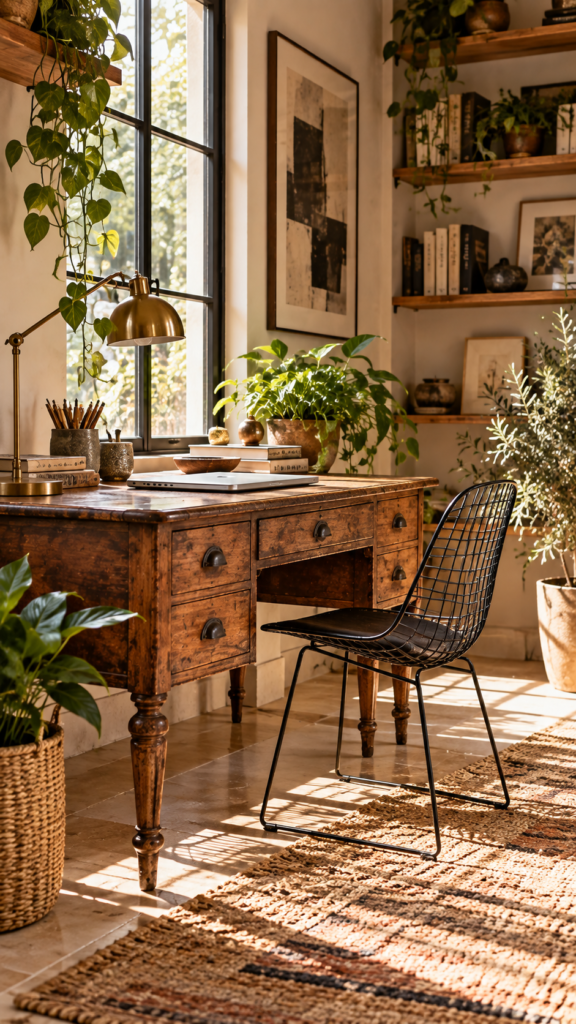
You can also mix materials to build texture. Pair warm vintage wood pieces with sleek modern materials like matte black metal, clear acrylic, or polished concrete. A vintage wooden desk paired with a modern wire chair creates a dynamic workspace.
Modern Vintage Decor in the Dining Area
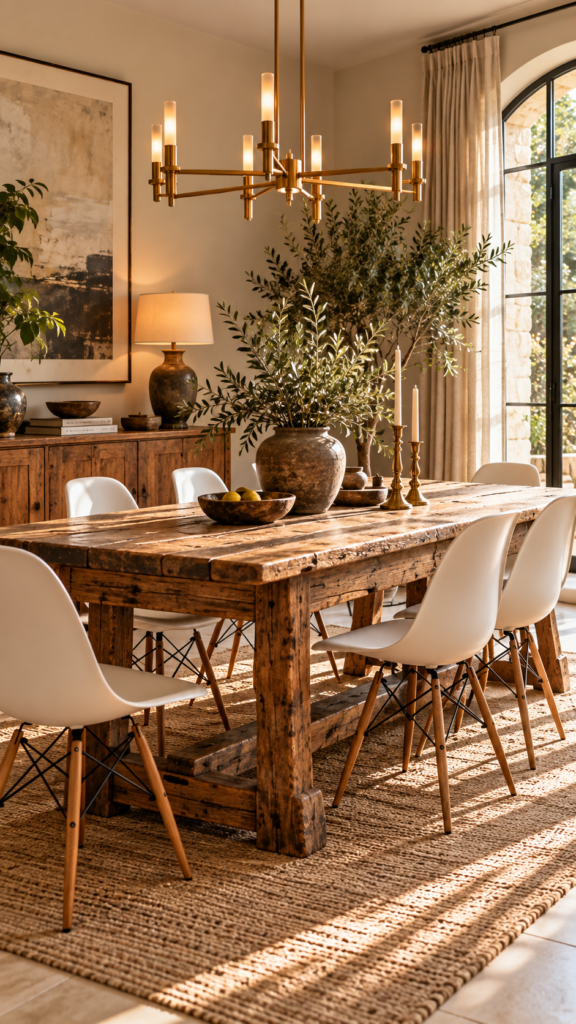
The dining room offers a fantastic opportunity to showcase Modern Vintage Decor. One of the most effective ways to mix eras here is by contrasting the dining table with the chairs. This simple juxtaposition gives the room a curated, editorial feel.
Try placing a set of sleek, modern molded plastic chairs around a heavy, rustic farmhouse table. The contemporary chairs keep the bulky table from feeling too heavy, while the aged wood grounds the modern chairs with warmth.
Alternatively, surround a minimalist, glass-topped modern table with a set of mismatched vintage wooden chairs. Paint the chairs in a unified color, like matte black or soft sage green, to tie them together. Finish the look with a modern brass chandelier hanging above to illuminate the setup.
Old and New Interior Design in the Bedroom
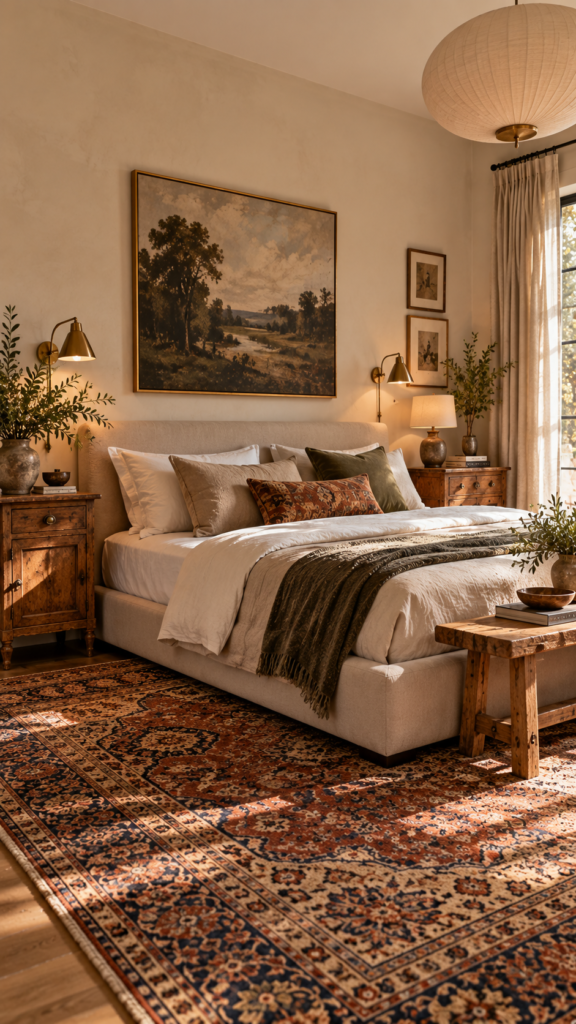
Your bedroom should be a personal sanctuary. When applying Old and New Interior Design principles to a sleeping space, focus on creating a restful, uncluttered environment. The room benefits from the warmth of vintage items, but it needs modern elements to stay fresh.
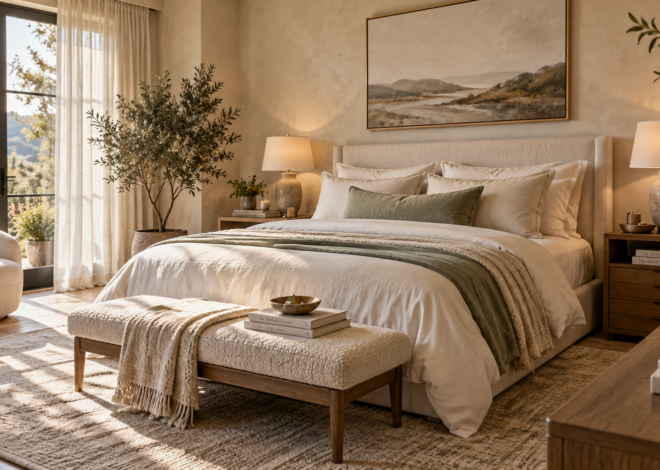
A simple, modern platform bed with clean lines serves as a great foundation. Instead of buying matching modern nightstands, hunt for a pair of vintage pieces. A minimalist bed with antique nightstands introduces immediate character. They don’t even need to match each other; a vintage record cabinet on one side and a retro wooden stool on the other works well.
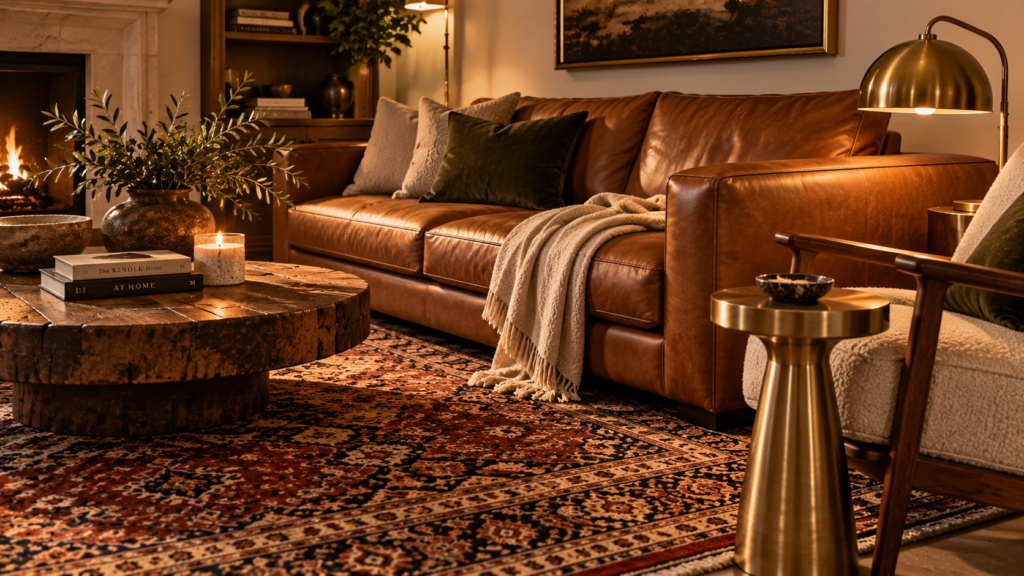
Anchor the bed with a large, vibrant antique Persian rug. The intricate patterns of the vintage rug will stand out sharply against the minimalist lines of the modern bed frame, striking a clear balance between eras.
Soften Sleek Lines with Vintage Textiles
If you have a room filled mostly with contemporary furniture, it can sometimes feel a bit cold or sterile. The easiest way to practice how to combine old and new furniture without buying heavy pieces is through textiles. A vintage rug in a modern room instantly injects warmth and texture.
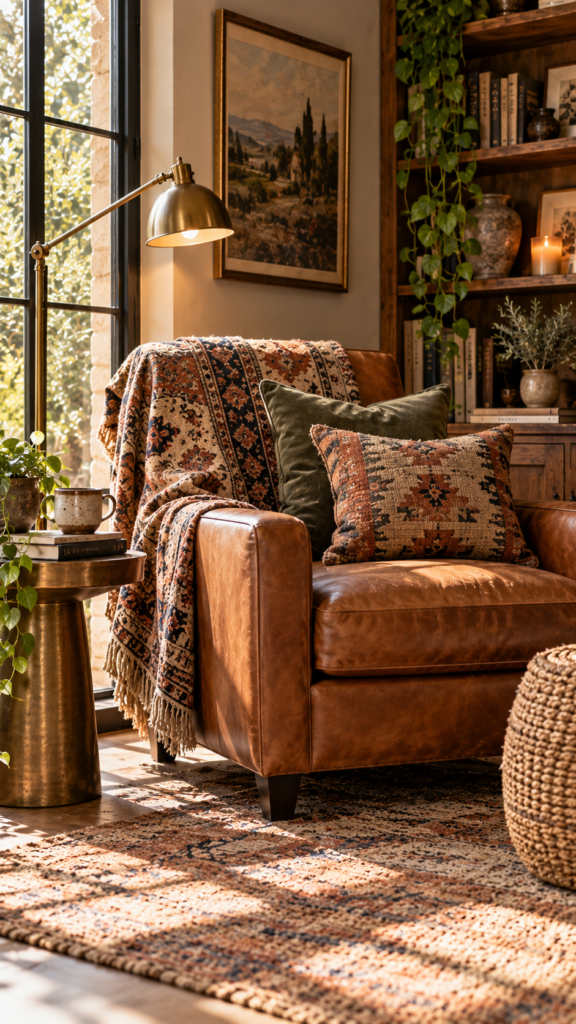
Drape a faded vintage tapestry over the back of a modern leather armchair, or use genuine vintage mud-cloth to make pillow covers for a new, structured sofa. Handwoven textiles bring a human touch into the space.
Window treatments also play a role. Instead of harsh modern roller blinds, opt for floor-length linen curtains hung on a vintage brass rod. The soft draping of the fabric breaks up the sharp geometry of modern windows.
Scale and Proportion: Keeping the Balance
One of the biggest mistakes people make when mixing eras is ignoring scale. Vintage furniture, especially pieces from the Victorian or Edwardian eras, can be quite large and visually heavy. Modern furniture tends to sit lower to the ground and features a smaller footprint.
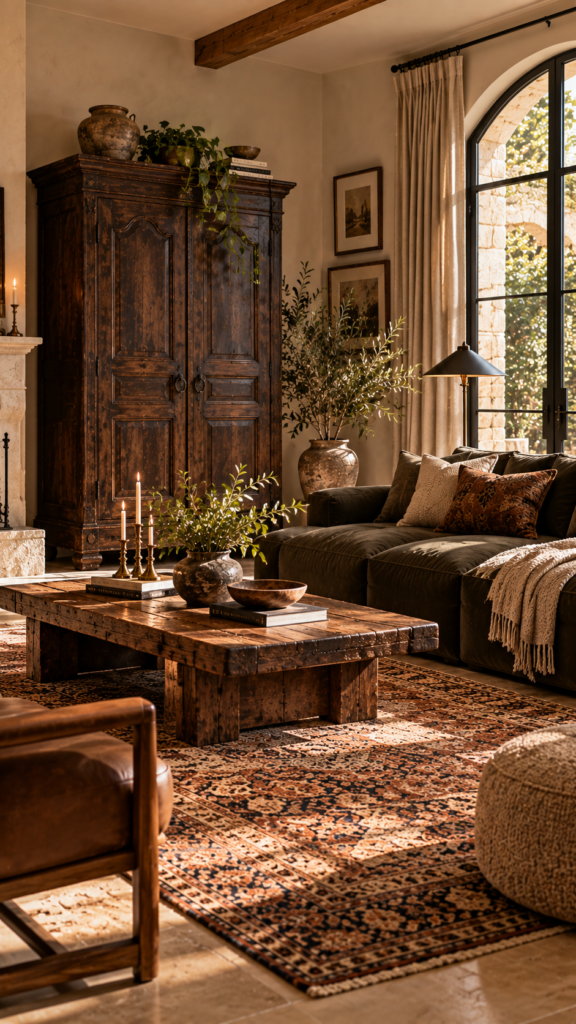
To master Vintage Furniture Styling, you must balance the visual heaviness in the room. If you place a massive, dark antique armoire on one side of a room, you cannot put a tiny, glass modern side table opposite it. The room will feel lopsided.
Instead, balance a heavy vintage piece with modern furniture that holds similar visual weight. A thick, chunky modern sofa in a dark fabric can balance a large vintage cabinet. Pay attention to seat height, table height, and the spacing between pieces, ensuring the eye travels comfortably without one vintage piece overwhelming everything else.
Pair Antique Furniture with Contemporary Art
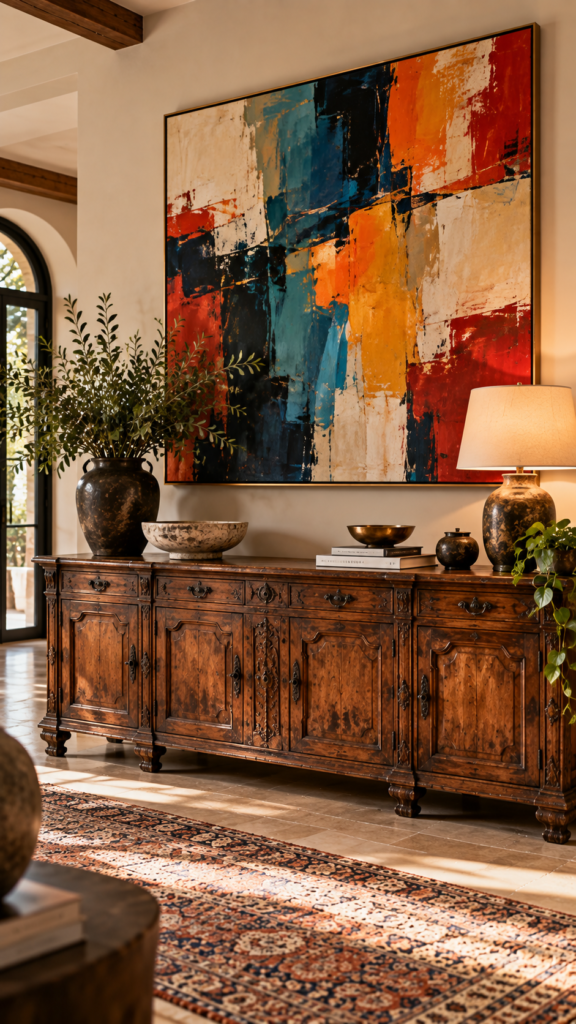
If you are looking for more modern and vintage furniture ideas, look at the art on your walls. Art is a powerful unifier. Hanging contemporary art above a traditional piece of furniture creates an immediate contrast that defines eclectic design.
Take an ornate, vintage wooden credenza or an antique dresser. Left alone, it might feel dated. But if you hang a bold, abstract modern painting directly above it, the setup feels intentional. The contemporary art acts as an anchor, bringing the antique piece into the present day.
You can reverse this trick as well. Hang a collection of vintage, gilded-frame oil paintings above a sleek, minimalist modern sofa. The juxtaposition creates a curated gallery feel.
Modern Vintage Home Decor in the Entryway
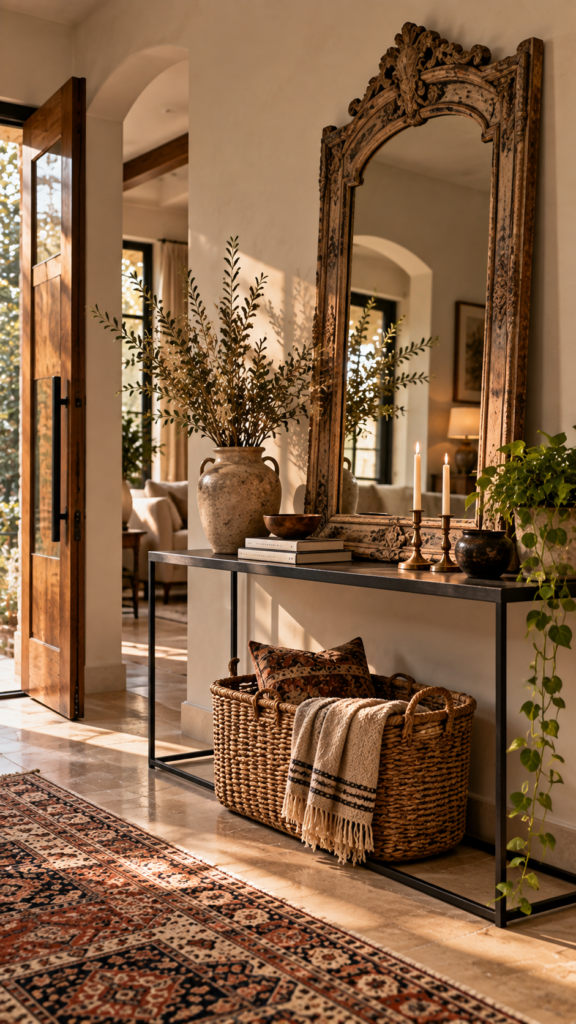
Your entryway is the first impression guests have of your home, making it the ideal spot to introduce your Modern Vintage Home Decor. Because entryways are usually small, you only need two or three carefully chosen items to make an impact.
Start with a sleek, modern console table with a slim metal frame to provide practical surface area without cluttering the floor space. Beneath the table, place a vintage wicker basket for shoes or umbrellas.
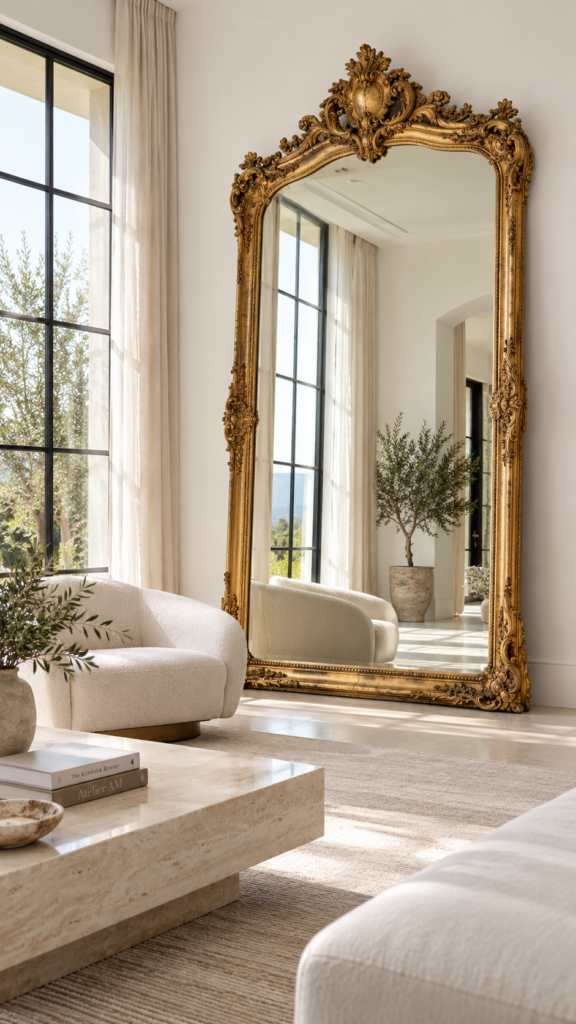
Lean a vintage mirror with a weathered, carved frame on top of the modern console. Add a contemporary ceramic vase filled with dried branches. This small vignette tells a complete design story, smoothly blending old-world charm with current minimalism.
Reviving Vintage Seating with Modern Fabrics
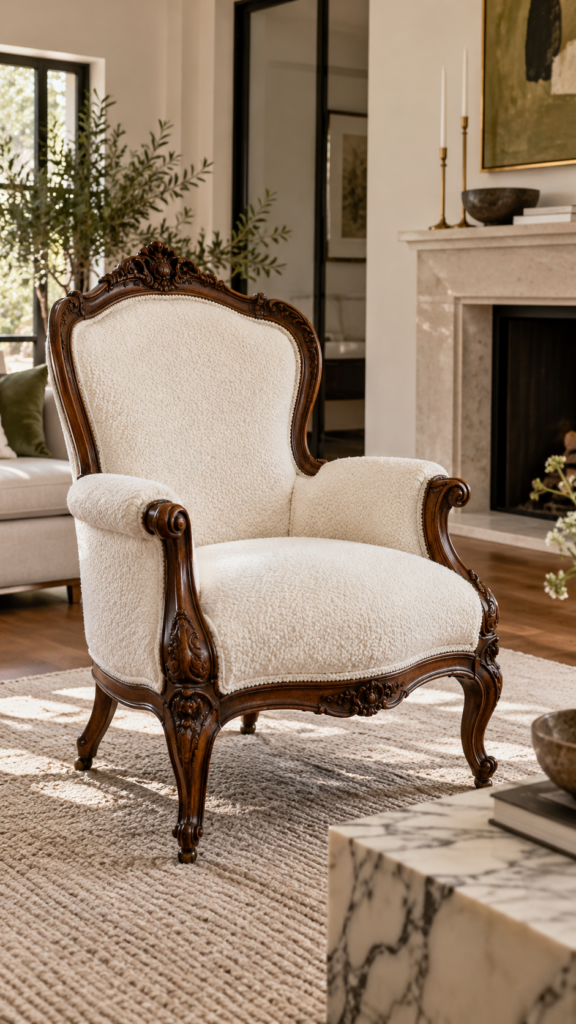
Sometimes, the shape of a vintage piece is excellent, but the fabric feels outdated. Reupholstering is a classic trick used in Modern and Vintage Interior Design. By recovering an old chair in a contemporary fabric, you create a custom piece that bridges both worlds.
Find a pair of mid-century or Victorian armchairs with great wooden frames. Strip away the faded floral fabrics and replace them with modern textiles like crisp white bouclé, rich emerald green velvet, or natural woven linen.
The modern upholstery updates the chair immediately, making it easy to pair with a contemporary sofa. However, original woodwork, rich patina, or distinctive craftsmanship on the frame should usually be preserved and left unpainted to maintain the piece’s historical integrity.
Layering Eras Through Lighting
Lighting functions as the jewelry of a room. Mixing eras in your lighting fixtures is a subtle but highly effective way to emphasize an eclectic layout. Rather than matching all your lamps and overhead lights, treat them as independent sculptural elements.
Hang an ornate, vintage crystal chandelier or a retro glass pendant light in the center of the room. Then, illuminate the corners with modern, matte black floor lamps or sleek brass sconces. Placing a sculptural modern lamp beside a traditional cabinet bridges the decades seamlessly.
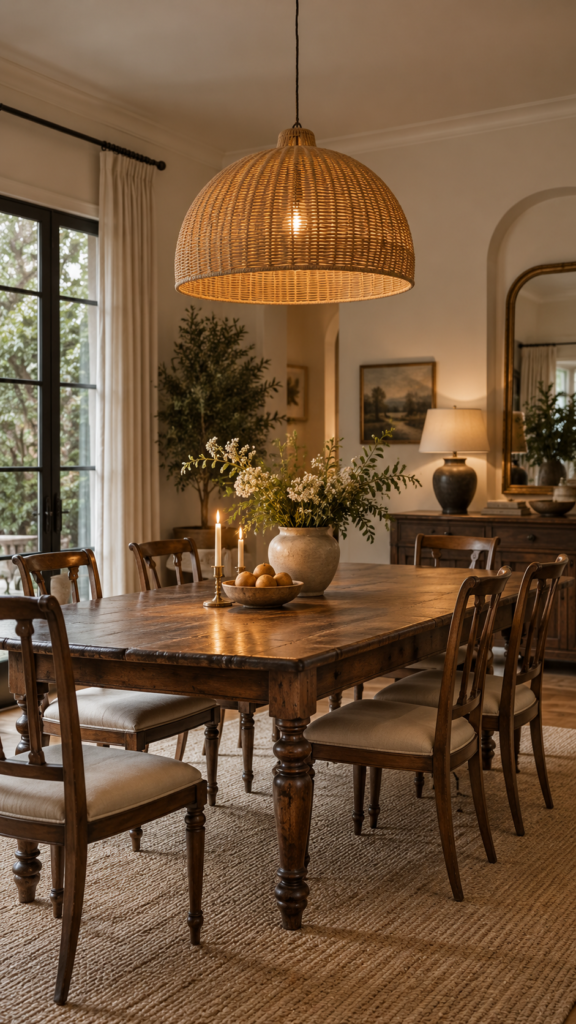
Lighting made from natural materials also adds great texture. A modern woven rattan pendant light hung over a vintage wooden dining table creates a warm, inviting glow that ties the old and new elements together.
How to Make Mismatched Furniture Look Cohesive
If you are wondering how to make mismatched furniture look cohesive, the answer is repetition. Connecting unrelated furniture requires establishing subtle links throughout the room so nothing feels accidental.
- Repeated Color: Pull a minor color from a vintage rug and use it in modern throw pillows.
- Shared Wood Undertones: Group pieces with similar warmth, even if the wood species differ.
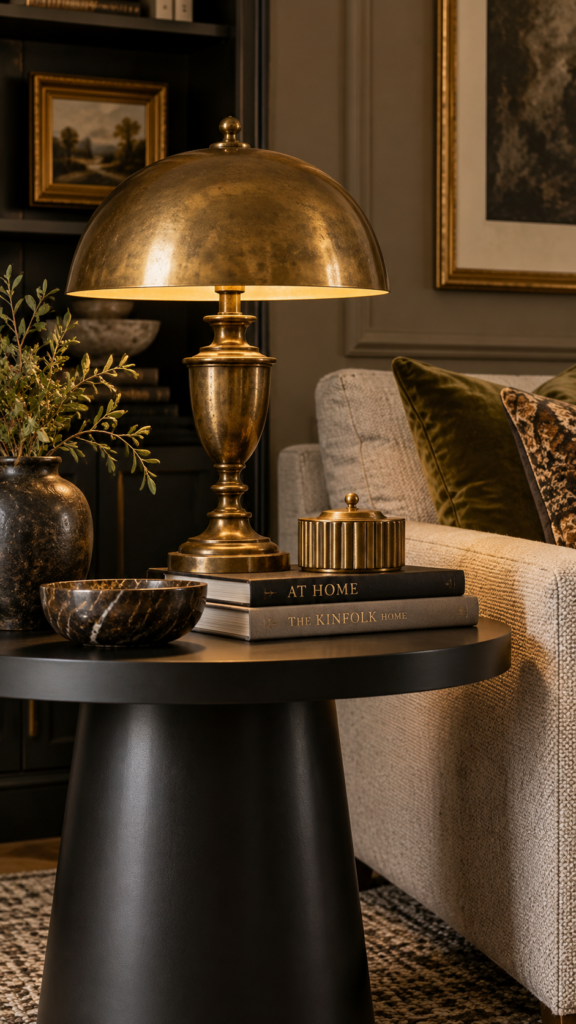
- Consistent Metal Finishes: If brass appears on a vintage lamp, repeat a small amount of brass elsewhere in a modern fixture or accessory.
- Similar Visual Weight: Pair a heavy mid-century credenza with a substantial modern sofa so neither feels overpowered.
- Repeated Shapes: Echo the curved legs of an antique table with a round contemporary mirror.
- Coordinated Textiles: Use a unifying fabric texture, like linen or velvet, on both old and new seating.
- Strategic Negative Space: Give distinctive pieces breathing room. Do not crowd a statement antique chair with smaller accessories.
Common Mistakes When Mixing Modern and Vintage Furniture
Even with great pieces, the mix can go wrong if the execution lacks restraint. Here are a few mistakes to avoid and tips for mixing furniture from different eras successfully:
- Using too many statement vintage pieces: Having multiple focal points creates chaos. Choose one or two hero pieces per room and let the rest play a supporting role.
- Ignoring scale and proportion: A delicate Victorian side table will look lost next to a massive modern sectional. Keep proportions related.
- Trying to match every wood tone: Exact matches look manufactured. Focus on blending complementary undertones instead.
- Introducing too many unrelated colors: Limit your palette so the furniture styles provide the contrast, not a chaotic color scheme.
- Using competing patterns: If your vintage rug has a loud pattern, opt for solid modern upholstery to maintain balance.
- Filling every empty space: Negative space allows the eye to rest and highlights the differences between eras.
- Choosing pieces that share no visual connection: Always link items through at least one shared element, whether it is color, texture, or shape.
- Making the room feel themed: Avoid buying everything from a single era, which looks more like a time capsule than a collected home.
How Much Vintage Furniture Should You Use?
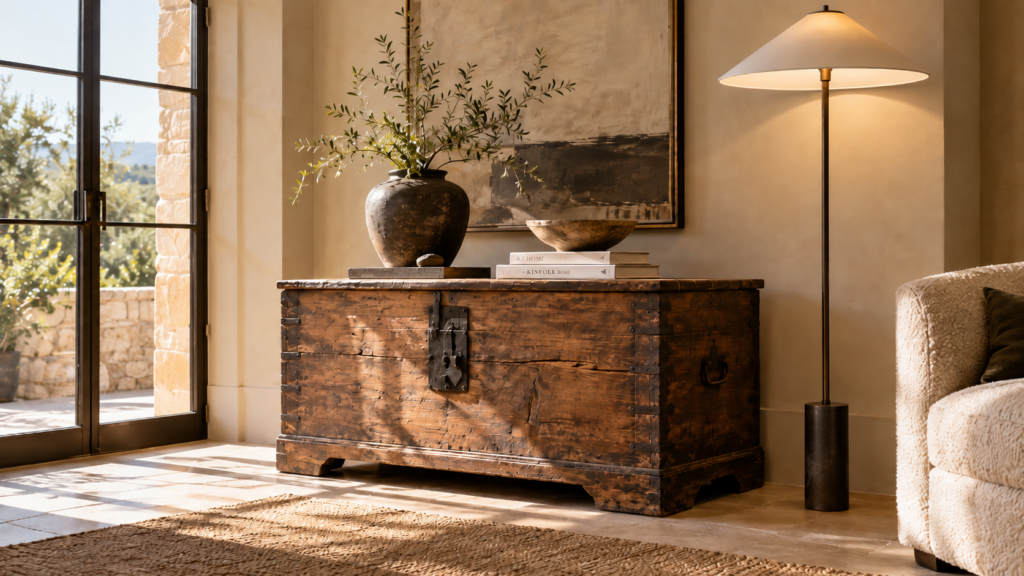
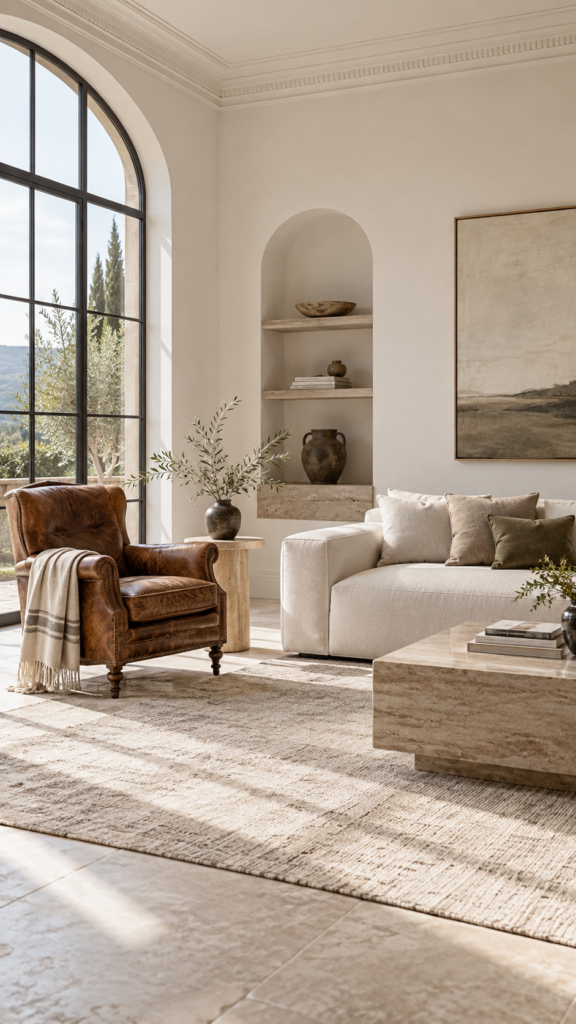
There is no fixed percentage for creating a collected home. While the 80/20 approach is a practical starting point, some rooms work exceptionally well with a 70/30 or 60/40 split. In minimal, contemporary spaces, you might rely on just one strong vintage statement piece, such as an oversized antique mirror or a weathered chest, to ground the room.
The objective is visual balance rather than strict numbers. Let the architecture of your home and your personal aesthetic dictate how heavily you lean into historical pieces. Focus on how the pieces interact rather than counting how many belong to a specific decade.
Frequently Asked Questions
Can you mix modern and antique furniture?
Yes, combining modern lines with antique character adds depth and prevents a room from feeling like a catalog. The key is linking them through shared colors, materials, or textures so the pairing feels deliberate.
How many vintage pieces should a room have?
It depends on the scale of the items, but one to three well-placed vintage pieces are often enough to give a modern room history without making it feel cluttered or themed.
Do wood tones need to match?
No. Rooms look more authentic when wood tones vary. Focus on matching the undertones (warm, cool, or neutral) rather than trying to find the exact same finish.
Can you mix mid-century furniture with traditional pieces?
Absolutely. The clean, tapered lines of mid-century design pair well with the heavier, ornate details of traditional furniture, provided they share a cohesive color palette and appropriate scale.
How do you modernize vintage furniture?
Reupholstering seating in contemporary fabrics like bouclé or performance linen updates the look immediately. You can also pair vintage wood pieces with modern abstract art or sleek lighting fixtures to bring them into the present day.
Curating a Collected Home Over Time
Mastering the art of mixing eras is about establishing thoughtful relationships between contrasting elements. Successful design depends heavily on editing, repetition, scale, material relationships, and leaving enough visual breathing room for each piece to stand out. When combining modern and historical designs, rely on cohesive color palettes and related material finishes to bridge the gap.
Avoid the urge to buy everything at once. With a little editing and experimentation, the mix can feel collected rather than forced. Let your home evolve gradually, layering in new finds as you discover items that resonate with your personal style and architecture.
Related Posts
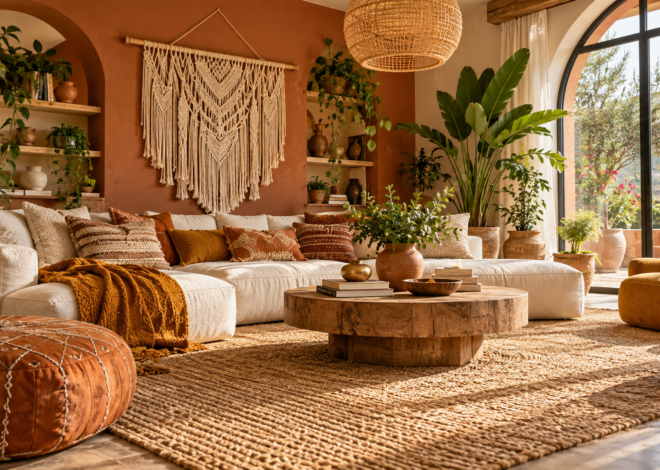
20 Boho Color Palette Ideas to Transform Your Home Interior
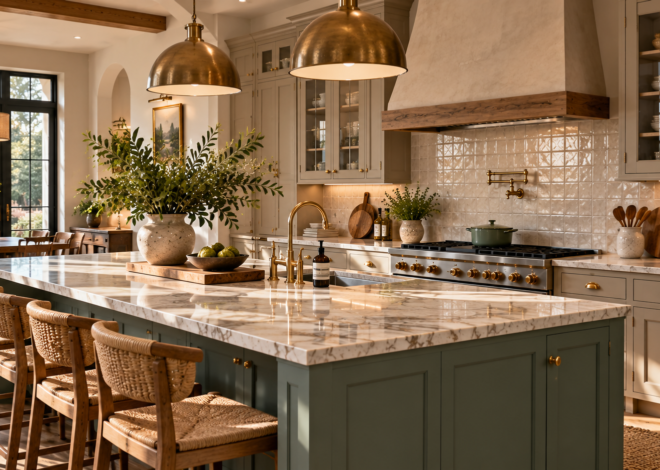
10 Kitchen Color Combinations to Try