15 Bathroom Decor Ideas to Create a Stylish and Relaxing Space
Finding the right bathroom decor ideas can turn a purely utilitarian room into a considered, personal retreat. Whether you are updating a primary en suite or seeking simple bathroom decor ideas for a guest washroom, successful interior design starts with balancing practical needs and visual appeal. A well-designed bathroom balances function, storage, lighting, ventilation, moisture resistance, comfort, and visual calm.

By exploring a range of styles through color, materials, lighting, storage, and practical layout choices, you can create a space that meets your daily needs while reflecting your personal aesthetic. From organic modern materials and coastal simplicity to mid-century forms and moody finishes, these ideas offer practical inspiration for bathrooms of different sizes and styles.
How to Plan Your Bathroom Decor
Understanding how to decorate a bathroom begins long before you select paint colors or decorative accessories. First, evaluate the room size, layout, natural light, artificial lighting, and ventilation. Consider who uses the bathroom each day, how much storage is required, the humidity level, cleaning needs, and your available budget.
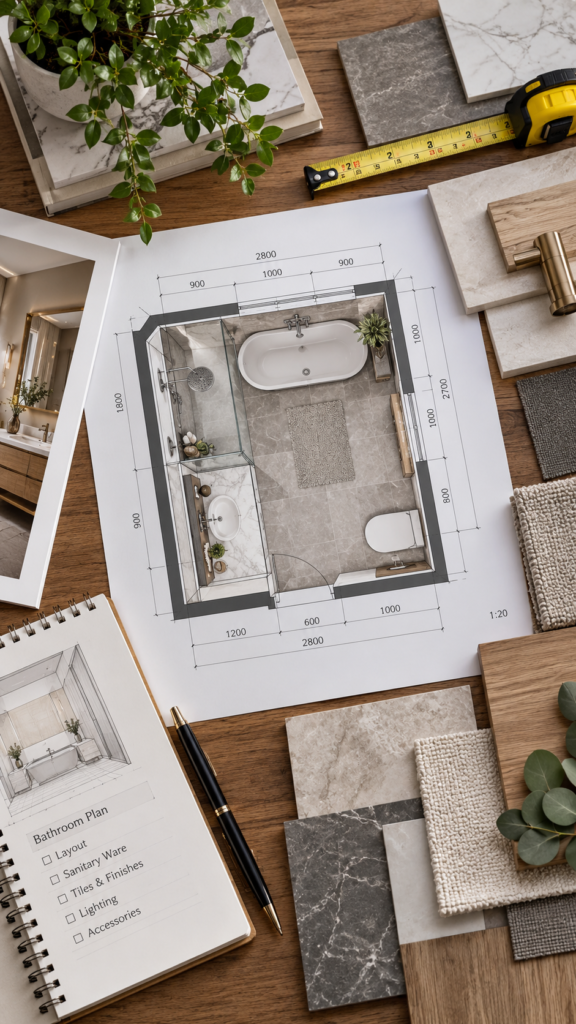
Style should follow function. Identify wet zones around the tub, shower, and sink, and choose surfaces that are appropriate for moisture exposure and regular cleaning. Electrical fixtures near wet areas should also be suitable for bathroom use and installed according to applicable local safety requirements.
1. The Earthy Organic Oasis
Bringing nature-inspired elements indoors is a practical approach to creating a calm, modern bathroom. The Earthy Organic concept focuses on light oak, natural stone, terracotta, and botanical touches. A palette of sage, warm beige, muted green, and soft brown helps create a grounded, visually restful environment.
Incorporate matte finishes and woven storage baskets to add texture without excessive shine. This organic design direction works best when countertop clutter is kept under control and the materials themselves are allowed to provide most of the visual interest.

Stone, wood, and terracotta used in wet environments may require appropriate sealing and finishing. Style the room with simple cotton textiles and carefully chosen greenery positioned away from direct water spray.
2. Minimalist Desert Chic
If you prefer a clean aesthetic but still want warmth, Minimalist Desert Chic offers a balanced direction. This look relies on sand tones, soft blush, muted ochre, warm white, and understated finishes that create a calm backdrop.
This approach works especially well when exploring small bathroom decor ideas. A floating vanity provides useful storage while exposing more of the floor, which can make a compact room feel visually lighter and less crowded.

Use simple mirrors, streamlined hardware, and closed storage to maintain the minimalist appeal. If you include plants, select them according to the bathroom’s actual natural light and humidity rather than assuming drought-tolerant plants will thrive in a damp room.
3. Vintage Eclectic Retreat
The Vintage Eclectic concept brings character and history into the bathroom by thoughtfully mixing old and new elements. To keep the space from feeling chaotic, repeat a few colors or finishes and limit the number of competing patterns.
This style creates strong opportunities for creative bathroom wall decor. Antique mirrors, vintage artwork, traditional brass fixtures, and painted furniture can all contribute to the collected look. A repurposed wooden dresser can also become a distinctive vanity if the surface is properly protected from moisture.
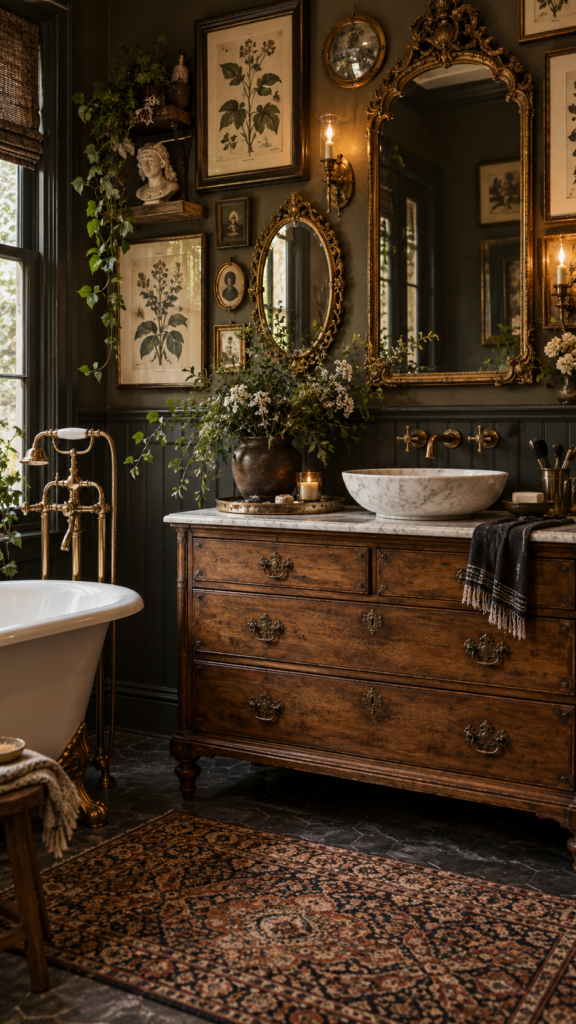
Choose quick-drying textiles and keep decorative rugs away from direct wet zones. Avoid thick, plush materials in areas that remain consistently damp, and allow any decorative floor textiles to dry fully between uses.
4. Tropical Spa Haven
Spa-inspired bathrooms typically focus on calm lighting, tactile materials, organized surfaces, and comfortable everyday details. The Tropical Spa concept uses lush greenery, warm wood tones, and light walls to create a resort-inspired atmosphere.
Use bamboo accents and woods appropriate for humid environments. Teak performs well in damp spaces, but it still benefits from appropriate care and finishing to help preserve its appearance and durability over time.

Uniform amber bottles can make frequently used toiletries look more organized. Fresh eucalyptus may be used as an optional decorative and aromatic detail, while plant choices should be based on light, ventilation, humidity, mature size, and maintenance needs.
5. Moroccan Inspired Sanctuary
For those who appreciate intricate patterns and rich textures, a Moroccan-inspired bathroom offers a distinctive design direction. Geometric tile, architectural arches, warm plaster-look walls, brass accents, and dark wood can create a layered environment with strong visual character.
This approach works especially well when architectural details and finishes become the main decorative features. Pierced brass lighting can add pattern through shadow, while textured towels and carved wood bring softness and contrast.
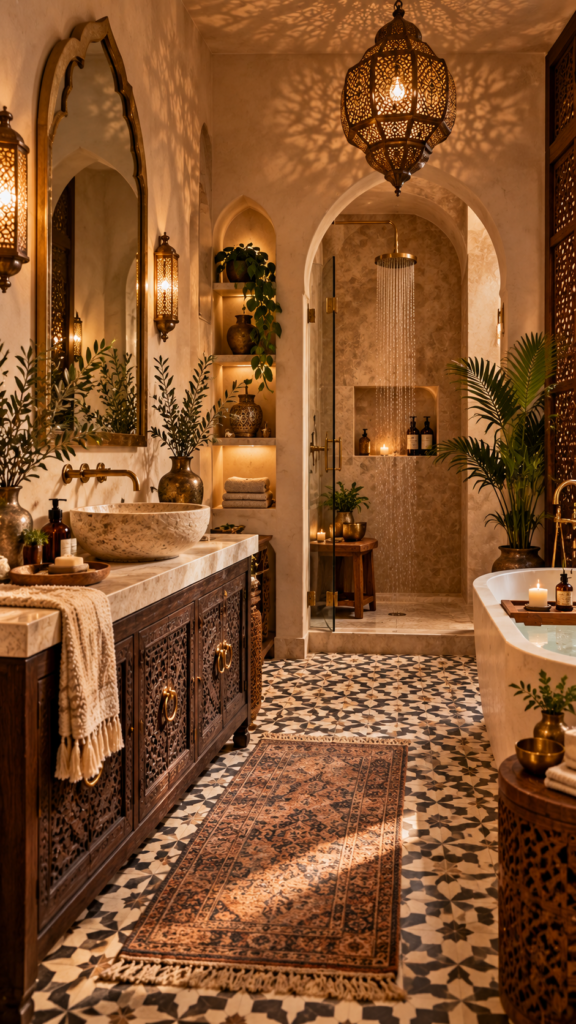
Traditional finishes such as tadelakt or similar waterproof plaster systems require correct installation, especially in wet zones. Decorative plaster should not be assumed to be waterproof unless it has been specified and installed for that purpose.
6. Moody Modern Bathroom
Dark tones can give a bathroom a more luxurious and intimate character. Charcoal, navy, forest green, and deep brown create a rich backdrop that feels especially effective when balanced with reflective surfaces and controlled lighting.
Use brass or bronze hardware, warm wood, and well-positioned sconces to prevent the palette from feeling visually heavy. Reflective mirrors and lighter textiles can also introduce contrast without weakening the dramatic mood.
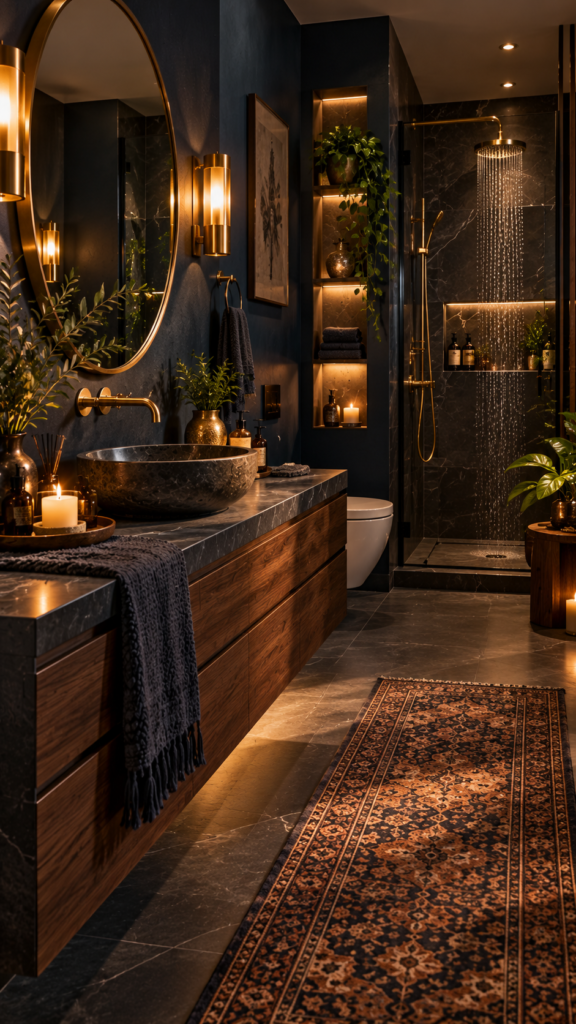
Dimmable wall lighting can support a softer evening atmosphere, while dedicated vanity lighting should remain bright and even enough for everyday grooming.
7. Coastal Bathroom
A Coastal Bathroom focuses on light, airiness, and relaxed texture without relying on obvious nautical motifs. A palette of blue-green, sandy beige, crisp white, and light wood can create a fresh, easygoing atmosphere.
Integrate woven storage baskets, linen-look textiles, and as much natural light as the space allows. Vertical shiplap or simple wall paneling can introduce subtle architectural detail without overwhelming the room.

Use wood carefully in wet zones. Ordinary decorative timber should be properly treated or kept away from areas exposed to regular splashing or standing moisture.
8. Industrial Bathroom
An Industrial Bathroom combines utilitarian materials with softer domestic details. Concrete, brick, metal, matte black fixtures, and warm wood can create a strong architectural foundation.
A concrete trough sink or metal-framed vanity works well within this aesthetic. Counterbalance the harder surfaces with soft towels, a restrained rug in a dry zone, and warm light that reduces the visual coldness of concrete and metal.

If you use Edison-style bulbs, choose bathroom-rated fixtures suitable for the installation area. Keep decorative wall hangings and other absorbent textiles in drier zones away from splashes and persistent humidity.
9. Cottagecore Bathing Space
Cottagecore embraces nostalgia, traditional craftsmanship, and a gentle romantic aesthetic. In bathrooms, this can include beadboard, pedestal sinks, delicate prints, woven baskets, linen-look textiles, and vintage-inspired lighting.
A classic pedestal sink paired with a softly patterned wall treatment can establish the look, while baskets and closed cabinets keep practical items organized.

Choose moisture-resistant wallpaper and use it only in areas with suitable ventilation and limited direct water exposure. Keep long fabrics and decorative skirts from touching wet floors so they can dry properly.
10. Mid-Century Modern Bathroom
The Mid-Century Modern Bathroom combines clean geometry with warm wood tones and restrained retro references. It is a useful direction for anyone looking for modern bathroom decor ideas with more personality than an all-white minimalist scheme.
Choose a vanity in walnut or teak tones with flat-panel doors, then introduce geometric tile, globe lighting, or accents in mustard, olive, burnt orange, or muted teal.
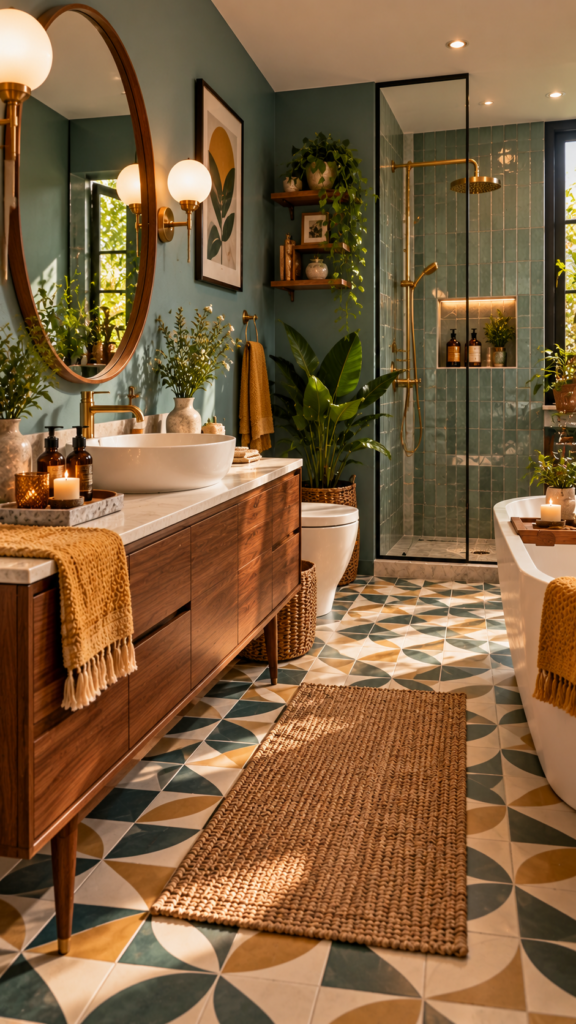
Avoid using too many period-specific motifs at once. A few recognizable references paired with contemporary fixtures, frameless glass, or simple tile can keep the room feeling current rather than themed.
11. Japandi Zen Corner
Japandi design combines Japanese minimalism with Scandinavian functionality. It emphasizes light woods, soft neutrals, clean storage, handmade ceramics, and a sense of visual calm.
Slatted wood details can provide architectural interest without overwhelming the room. Pair them with simple stone-look surfaces, neutral textiles, and discreet storage so the bathroom remains uncluttered.

A deep soaking tub can provide inspiration for this style, but the final choice should depend on available floor space, plumbing, access, and the overall bathroom layout.
12. Rustic Cabin Escape
The Rustic Cabin Escape uses rugged materials and warm lighting to create a textured, comfortable bathroom. Reclaimed wood, stone, copper, iron hardware, and woven textiles form the foundation of the look.
A hammered metal sink or substantial stone basin can add character to the vanity area, while warm towels and simple lighting soften the harder finishes.
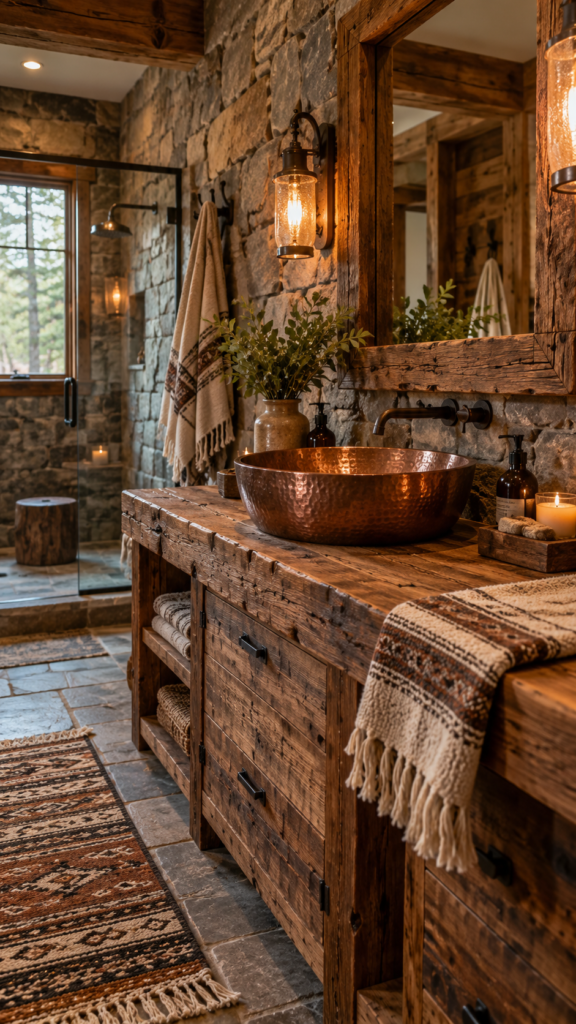
If you use reclaimed timber, seal it appropriately and keep untreated wood away from direct wet zones. This preserves the rustic appearance while making the material more suitable for a humid environment.
13. Urban Jungle Washroom
The Urban Jungle Washroom uses botanical elements to soften the hard surfaces typical of bathroom architecture. Plants can add color, movement, and a stronger connection to nature without relying on excessive decorative accessories.
Use deep green tile, terracotta or ceramic planters, simple white fixtures, and subtle wood accents as a backdrop. Rather than filling every surface with greenery, choose a smaller number of well-placed plants that fit the room’s proportions.
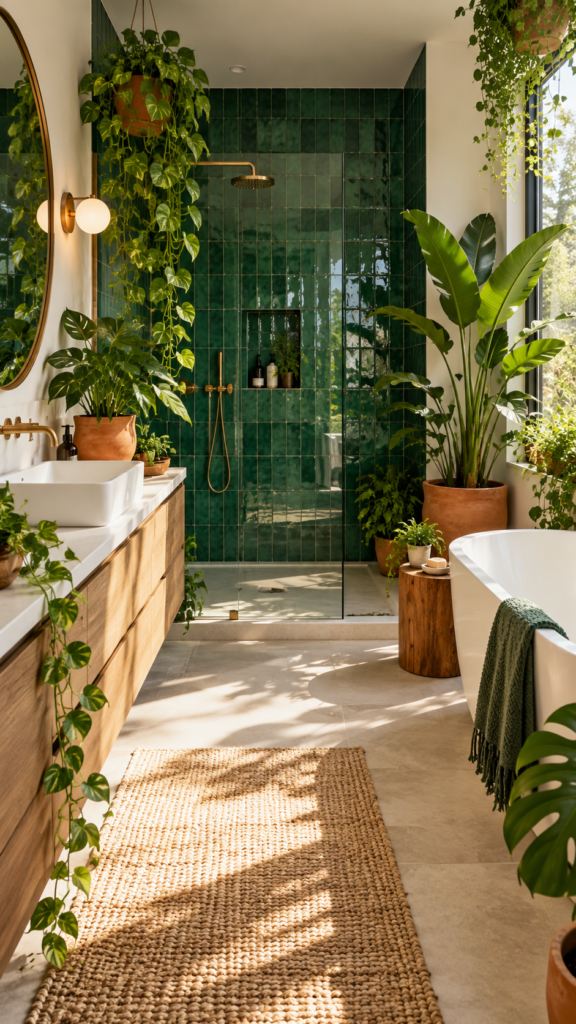
Select plants according to natural light, humidity, ventilation, watering needs, and mature size. Avoid trailing plants where they interfere with mirrors, fixtures, cleaning, or airflow. If supplemental grow lighting is required, use a suitable fixture positioned safely away from splash zones.
14. Wabi-Sabi Washroom
Wabi-sabi interiors celebrate subtle imperfection, tactile surfaces, and materials that feel handmade rather than overly polished. In a bathroom, this can translate into limewash-look walls, irregular tile, matte stone, handmade ceramics, and muted shades of taupe, clay, ash, and soft beige.
The key is to distinguish visual imperfection from poor performance. Wet zones still require durable, correctly installed, moisture-resistant surfaces even when the overall appearance is intentionally rustic or softly aged.
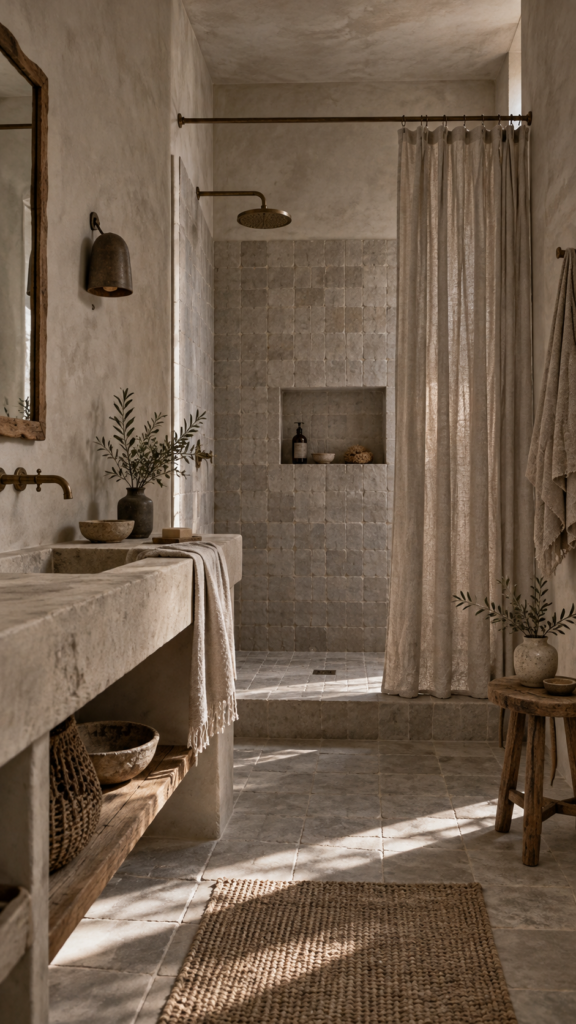
Choose a linen or linen-look shower curtain that hangs close to the floor without dragging in standing water. An irregular ceramic vessel, textured bath mat, or rough stone tray can add character without creating visual clutter.
15. Smart Storage Sanctuary
One of the most practical bathroom storage ideas is to treat organization as part of the design rather than an afterthought. A visually calm bathroom depends on having clear places for toiletries, towels, cleaning supplies, and everyday essentials.
Use closed vanity drawers for items that create visual clutter, while reserving open shelves for a small number of attractive and frequently used objects. Medicine cabinets, drawer organizers, wall hooks, shallow cabinets, and vertical storage can help make better use of limited space.
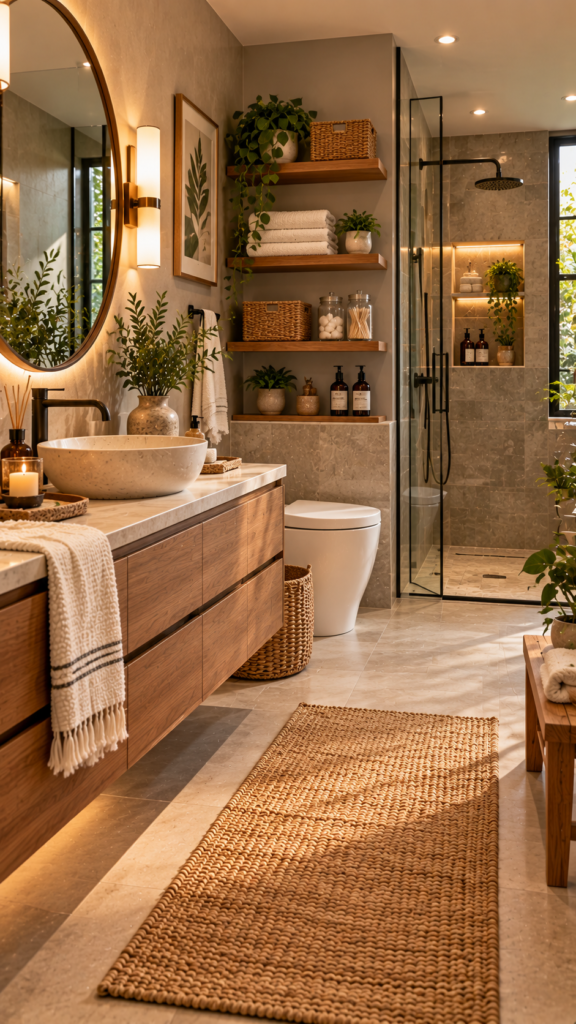
Keep cotton pads, cotton swabs, and similar hygiene products in closed or lidded containers when possible. Woven baskets can group skincare or hair products, while a stable towel rack or securely positioned ladder-style rack can provide additional storage without blocking circulation.
How to Make a Bathroom Feel Like a Spa
If you are wondering how to make a bathroom feel like a spa, begin with organization rather than decoration. Clear unnecessary products from visible surfaces, group everyday essentials neatly, and use closed storage whenever possible.
Layer soft ambient lighting with practical vanity illumination, and use dimmers where appropriate. Plush towels, a comfortable quick-drying bath mat, nature-inspired colors, subtle wood-look accents, and a few tactile materials can help create a more restful atmosphere.
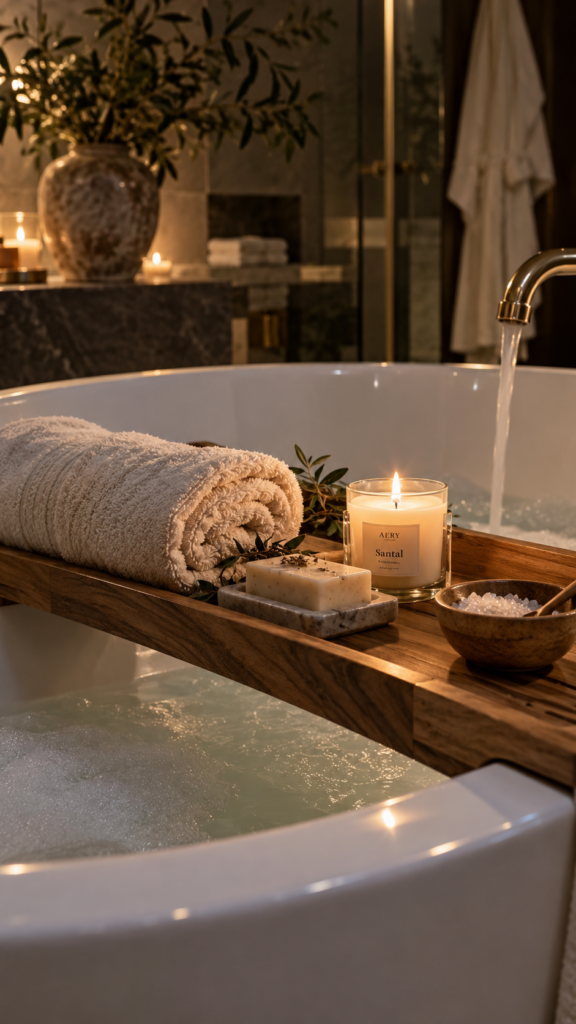
Small sensory details can also make the room feel more considered. A bath tray, neatly arranged products, subtle fragrance, or carefully chosen greenery can add comfort without overcrowding the space. Good ventilation remains essential for keeping the room comfortable and easier to maintain.
Bathroom Decor Ideas on a Budget
You do not need a full renovation to refresh the room. Some of the most effective bathroom decor ideas on a budget involve smaller changes that influence the overall look of the space.
- Refresh walls with moisture-appropriate paint.
- Replace worn towels and bath mats with coordinated colors.
- Update cabinet hardware, hooks, or drawer pulls.
- Frame an existing mirror or replace it with a better-proportioned shape.
- Introduce framed prints in areas protected from excessive moisture.
- Use baskets and drawer organizers to reduce countertop clutter.
- Replace an outdated shower curtain with a simpler, more textured option.
- Reorganize existing storage before buying additional furniture.
Peel-and-stick decorative details can also work in dry areas, but avoid using products not designed for high humidity inside showers or other constantly wet zones.

How to Use Mirrors in Bathroom Decor
Mirrors are both practical and decorative. They can reflect natural and artificial light, help compact bathrooms feel more open, and create a strong focal point above the vanity.
Round and arched mirrors can soften spaces dominated by straight lines, while rectangular mirrors often suit wider vanities. Oversized mirrors make a stronger visual statement, and mirrored medicine cabinets combine reflection with hidden storage. The best choice depends on the proportions of the vanity, wall, and surrounding fixtures.

Layer Bathroom Lighting for Function and Atmosphere
Strong bathroom lighting ideas usually combine several types of illumination. Ambient lighting provides general brightness, vanity or task lighting helps with grooming, and accent lighting can highlight architectural or decorative details.
At the vanity, aim for even illumination around the face instead of relying entirely on a single ceiling fixture that may create shadows. Wall sconces, integrated mirror lighting, or well-positioned fixtures can improve visibility.
Any fixture installed near a tub, shower, or other wet area should be rated for its location and installed according to applicable electrical requirements.
Use Textiles to Add Softness and Color
Textiles are one of the easiest ways to change the mood of a bathroom without altering permanent finishes. Towels, bath mats, shower curtains, and suitable window treatments can introduce color, pattern, and texture while softening tile, stone, and glass.
Choose washable, quick-drying materials whenever possible, especially in rooms with limited ventilation. Avoid fabrics that remain damp for long periods, and allow towels and mats to dry fully between uses.
Common Bathroom Decorating Mistakes
- Leaving too much clutter on the countertop: Store daily products in drawers, cabinets, or grouped containers to create calmer surfaces.
- Relying only on overhead lighting: Add appropriate vanity or accent lighting to improve both function and atmosphere.
- Ignoring ventilation: Moisture can affect paint, grout, textiles, and furniture, so ventilation should be part of the design plan.
- Using materials that are unsuitable for moisture: Choose finishes designed for the intended wet or damp environment.
- Using rugs that stay wet: Select quick-drying, washable bath mats and keep decorative rugs away from direct splash zones.
- Placing delicate art in steamy areas: Keep moisture-sensitive artwork away from showers and use materials that can tolerate the room’s conditions.
- Displaying too many small accessories: Use fewer, larger decorative pieces so the room feels more intentional.
- Ignoring storage: Include enough closed storage for toiletries, cleaning products, and extra supplies.
- Choosing a mirror that feels out of scale: Relate the mirror size to the vanity and surrounding wall space.
- Choosing plants only for appearance: Select greenery according to available light, humidity, ventilation, and maintenance requirements.
- Blocking walkways: Avoid stools, baskets, or decorative furniture that interfere with doors, drawers, or circulation.
- Using oversized furniture in a small bathroom: Floating vanities, shallow storage, and wall-mounted pieces can reduce visual and physical bulk.
- Mixing too many unrelated finishes: Repeat a few colors or materials throughout the room to create visual consistency.
- Making the bathroom difficult to clean: Leave enough clear surface area and avoid unnecessary objects in splash-prone zones.
Frequently Asked Questions
How can I make my bathroom look more stylish?
Start by reducing visual clutter and creating a consistent color and material palette. Updating the mirror, lighting, textiles, hardware, and storage can make a noticeable difference without requiring a full renovation.
How can I make a small bathroom look bigger?
Use visually light furniture, wall-mounted storage, good lighting, and a well-proportioned mirror. Keeping surfaces clear and using a cohesive color palette can also help the room feel less crowded.
How do I make my bathroom feel like a spa?
Focus on organization, soft lighting, comfortable towels, a simple color palette, and tactile materials such as wood-look finishes, stone, or woven details. Keep visible products neatly arranged and avoid overcrowding surfaces.
What bathroom decor makes a space look expensive?
Large mirrors, well-proportioned lighting, cohesive hardware, quality-looking textiles, and restrained accessories can create a more polished appearance. Consistency between finishes often matters more than the price of individual pieces.
How can I decorate a bathroom on a budget?
Try paint, new towels, an updated shower curtain, framed art, storage baskets, new hardware, or a refreshed mirror. Decluttering and reorganizing existing items can also improve the room without costing anything.
What colors make a bathroom feel relaxing?
Soft neutrals, muted greens, dusty blues, warm beige, taupe, and gentle earth tones can create a visually calm atmosphere. The best choice depends on natural light and the finishes already present in the room.
What should I put on bathroom walls?
Consider mirrors, moisture-appropriate artwork, shelving, tile, beadboard, or decorative wall finishes designed for the location. Keep delicate paper and untreated materials away from areas exposed to frequent steam or splashing.
Are plants a good idea in a bathroom?
They can be, but only when the room provides suitable light, ventilation, and humidity for the plant you choose. Not every tropical or humidity-loving species will thrive in a dark bathroom.
How do I decorate a bathroom without making it look cluttered?
Choose fewer decorative objects and prioritize closed storage for everyday products. Repeat a limited number of colors and materials, and leave some surfaces intentionally clear.
What is the best lighting for a bathroom?
A layered approach usually works best. Combine general ambient light with even vanity lighting for grooming, then add accent lighting only where it improves the atmosphere or highlights a design feature.
Final Thoughts
Successful bathroom decor ideas should improve the way the room functions as much as the way it looks. Prioritize moisture-appropriate materials, effective lighting, ventilation, useful storage, comfortable proportions, and finishes that are easy to maintain.
You do not need to change everything at once. Start with practical improvements such as organization, lighting, textiles, or paint, then gradually introduce larger design elements as your budget allows. The best bathrooms feel calm, functional, and personal enough to make everyday routines feel a little more considered.